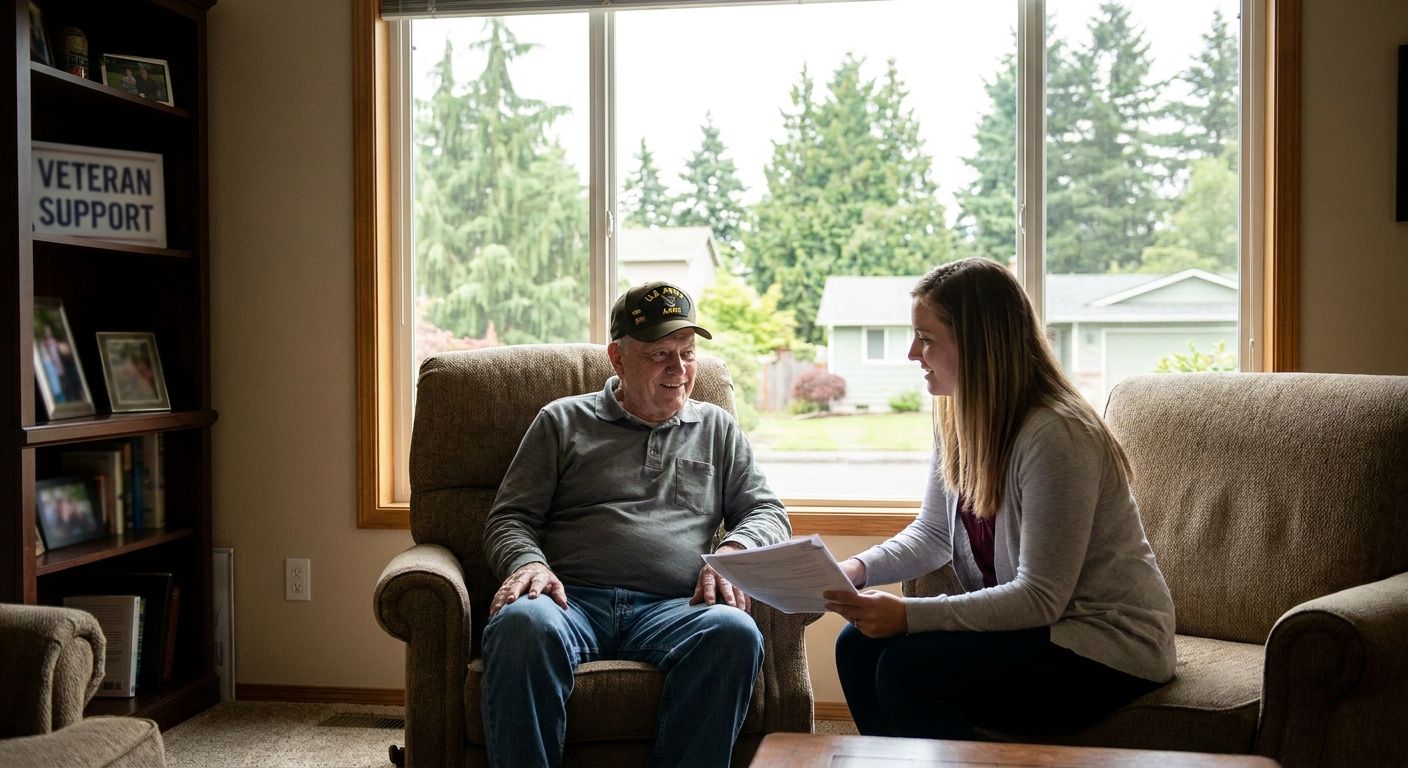
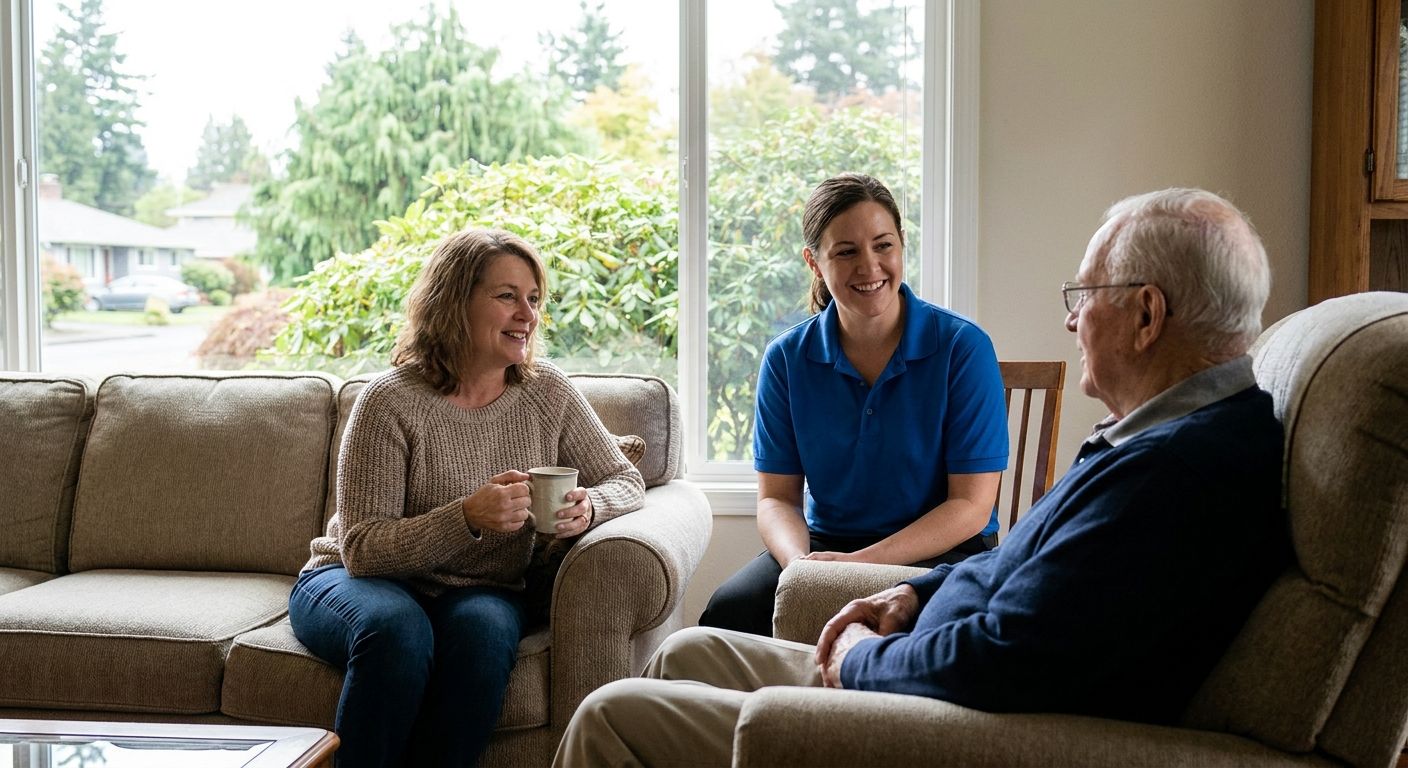
A break from caregiving isn't a luxury — it's what keeps a family caregiver able to keep going. This guide walks through what respite care actually looks like for families in Vancouver and Salmon Creek, WA, and how to tell a good short-term stay from one that just fills a bed.
- Respite care for family caregivers in Vancouver WA works best when the home already handles memory care, medication routines, and 24-hour supervision — not just short-term sitting.
- A trial stay before a long-term decision is the single best predictor of a good fit for both the resident and the family.
- Essential Living Adult Family Home in Salmon Creek is built for scenarios like post-hospital recovery, dementia support, and diabetes medication routines — right fit for most respite needs.
- Skip any respite option that can't answer specific questions about staffing, memory care readiness, or daily routine continuity before you book.
Why this matters
Caregiver burnout doesn't show up all at once. It shows up as missed sleep, a shortened temper, and a caregiver who hasn't left the house in weeks. Respite care for family caregivers exists for exactly that gap — a planned, temporary stay for your loved one so you can rest, travel, recover from your own procedure, or just breathe.
In 2026, more families in Clark County are booking respite stays proactively instead of waiting for a crisis. That shift matters because a planned stay gives the home time to learn your loved one's routine before an emergency forces a rushed placement. Essential Living Adult Family Home in Salmon Creek treats respite the same way it treats permanent residents — same staff, same routines, same attention, just for a shorter window.
Who this is for
This guide is for the adult child, spouse, or family member in Vancouver or Salmon Creek who has been providing unpaid daily care — bathing, medication reminders, meals, supervision — for months or years, and needs a real break without handing that care off to a stranger or a facility that feels institutional. It's also for families planning ahead of a surgery, a vacation, or a work trip where the caregiver simply can't be present for a stretch of days or weeks.
What to look for in respite care for family caregivers
Licensed adult family home setting, not a sitter service
A licensed adult family home operates under state oversight with trained staff on-site, which matters more during a short stay than a long one — there's no time to build trust slowly. Ask directly whether the home is a licensed AFH and how many residents it serves at once; smaller ratios mean your loved one isn't lost in a shift change.
Memory and dementia care readiness
If your loved one has any level of dementia, the respite home needs to already run memory care as a core service, not an accommodation. A home unfamiliar with sundowning or nighttime wandering can turn a short stay into a stressful one for everyone, including the resident.
Medication and routine continuity
A good respite stay keeps daily medication schedules and routines exactly as they are at home — same times, same coordination with the family, no surprises. This is one of the biggest sources of family anxiety around any short-term stay, and it's worth asking how the home documents and communicates routine changes.
24-hour supervision, not scheduled check-ins
Respite care only works as real relief if supervision is around the clock. A home offering 24-hour care means your loved one isn't unattended overnight, which is often the exact window a family caregiver worries about most.
Trial-stay flexibility
The best respite arrangements let you book a stay of days rather than committing to months, so you can test the fit before a bigger decision about long-term memory care or 24-hour senior care. A home that pushes you toward a long contract for a respite need is optimizing for its calendar, not your family's.
Family communication during the stay
You should get updates without having to chase them down. Ask how often staff communicate with family during a respite stay and what that looks like in practice — a phone call, a scheduled check-in, or only if something goes wrong.
The right respite fit for your situation
Not every respite need looks the same. Here's how three common scenarios map to what a home should offer.
The nighttime worry. If your loved one has dementia and sundowning makes evenings unpredictable, the respite stay needs staff trained specifically for nighttime wandering and agitation, not general supervision. Memory care for sundowning and nighttime wandering at Essential Living Adult Family Home is built around exactly this pattern. Right fit for families whose biggest fear is what happens after dark.
The recovery bridge. After a hospital discharge, some seniors need a short window of 24-hour supervision before they're steady enough to go home — and the family caregiver may not be ready either. 24-hour senior care for post-hospital recovery is designed for this exact bridge period. Right fit for families coming out of a hospital stay in 2026 and needing a few weeks, not a permanent move.
The routine that can't skip a day. When a loved one manages diabetes, medication and meal timing during a respite stay has to stay dependable and coordinated with family, without disruption. Medication management for seniors with diabetes keeps that routine steady during a short stay. Right fit for caregivers who worry a temporary change of setting will throw off a carefully managed schedule.
“A respite stay only gives you real rest if the routine at the home matches the routine at your kitchen table.”
What to avoid
- A stay with no pre-visit or assessment call. If a home will take a booking sight unseen with no conversation about medications, mobility, or memory needs, that's a sign staff won't be prepared on day one.
- A facility treating respite as a hotel stay. Some places offer a bed and meals with no continuity of care plan — fine for a healthy senior on vacation, not appropriate for someone managing dementia or a chronic condition.
- Vague answers about overnight staffing. If a home can't clearly explain who is on-site overnight during a respite stay, that's the exact gap most family caregivers are trying to close by booking one.
Ask about a respite stay
Talk through your loved one's routine before you book anything.
Verdict comparison
| Scenario | Core need | What matters most | Verdict |
|---|---|---|---|
| Nighttime wandering / dementia | Trained overnight staff | Memory care experience, not general supervision | Right fit |
| Post-hospital recovery | 24-hour supervision | Steady oversight during the recovery window | Right fit |
| Diabetes medication routine | Routine continuity | Dependable timing, family coordination | Right fit |
| No assessment call offered | N/A | Home won't learn your routine before day one | Skip |
FAQ
What is respite care for family caregivers?
Respite care is a temporary, short-term stay at a residential care home that gives a family caregiver a planned break while their loved one continues to receive daily supervision, medication routines, and support. It's typically arranged in advance, not as an emergency placement.
How long can a respite stay last at an adult family home?
Respite stays commonly run from a few days to a few weeks, depending on the family's need and the home's availability. A shorter trial stay is also a common way to test fit before considering a longer-term move.
Is respite care different from long-term memory care?
Yes. Respite care is temporary and planned around a specific gap in caregiving, while long-term memory care is an ongoing residential arrangement. Many families use a respite stay first to see how their loved one adjusts.
Does respite care in Vancouver WA include medication management?
At a home built for medication management, yes — routines and timing continue exactly as they do at home during a respite stay. Ask specifically how the home documents and coordinates medication schedules with the family before booking.
How much notice do I need to book respite care?
Notice requirements vary by home and availability, so it's worth calling as soon as you know you'll need a break in 2026 rather than waiting until the week before. Homes that require an assessment call also need lead time to prepare.
Can respite care help if my parent has early-stage dementia?
Yes — a respite stay at a home experienced with memory care can support routines and reduce confusion around a temporary change in setting. It also gives the family a low-pressure way to see how the home handles memory-related needs.
Is respite care only for emergencies?
No, most respite stays are planned ahead of a surgery, trip, or simply a scheduled break for the caregiver. Planned stays give staff time to learn routines, which usually makes for a smoother experience than an emergency booking.
What happens during a respite stay at an adult family home?
Daily routines continue as close to normal as possible — meals, medication timing, supervision, and any memory care support the resident already needs. Families typically get updates during the stay rather than only hearing from staff if something changes.
One last thing
The families who get the most out of respite care are the ones who book it before they're desperate for it. Waiting until a caregiver is exhausted or a health crisis forces the issue means less time for staff to learn routines and more stress for everyone involved — booking a stay in 2026 while things are stable, even a short one, sets up a much smoother experience than booking one in a panic.