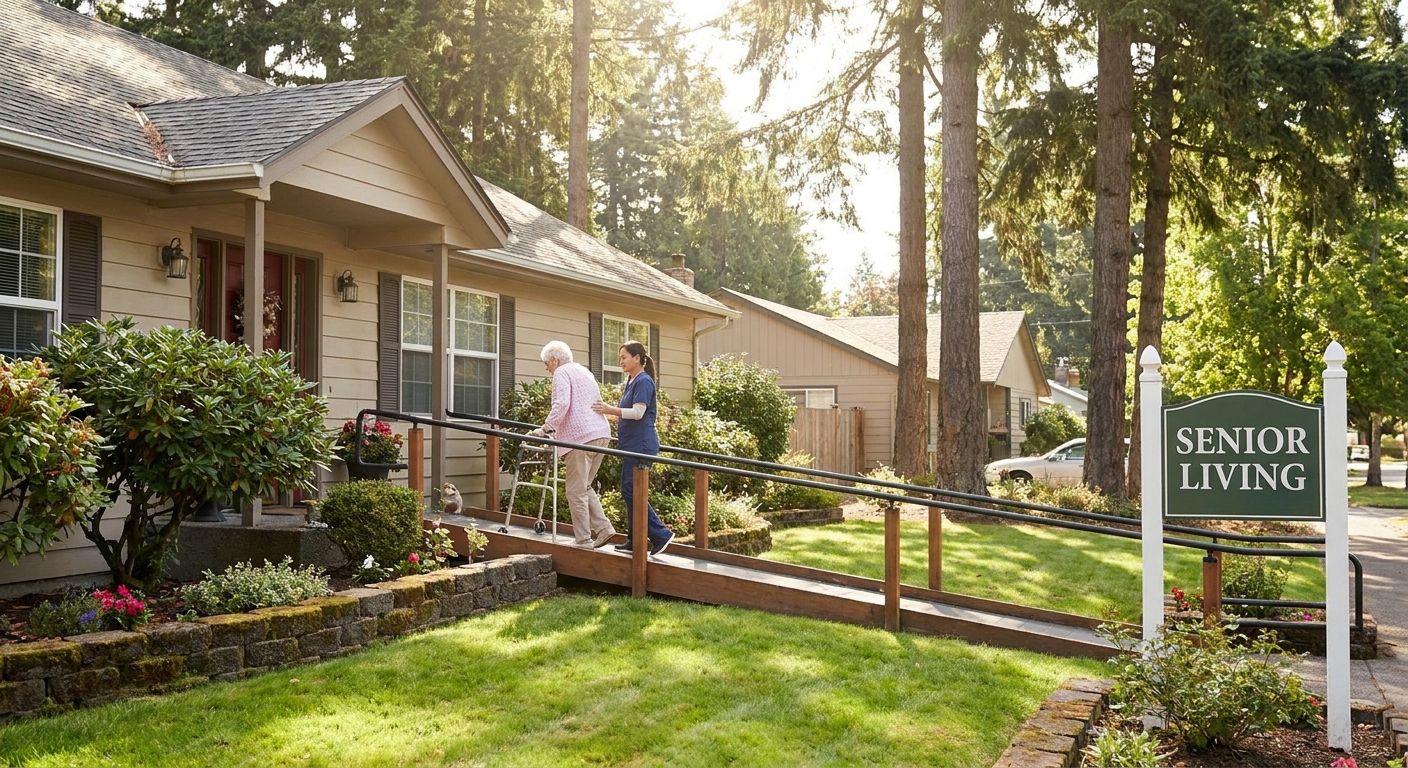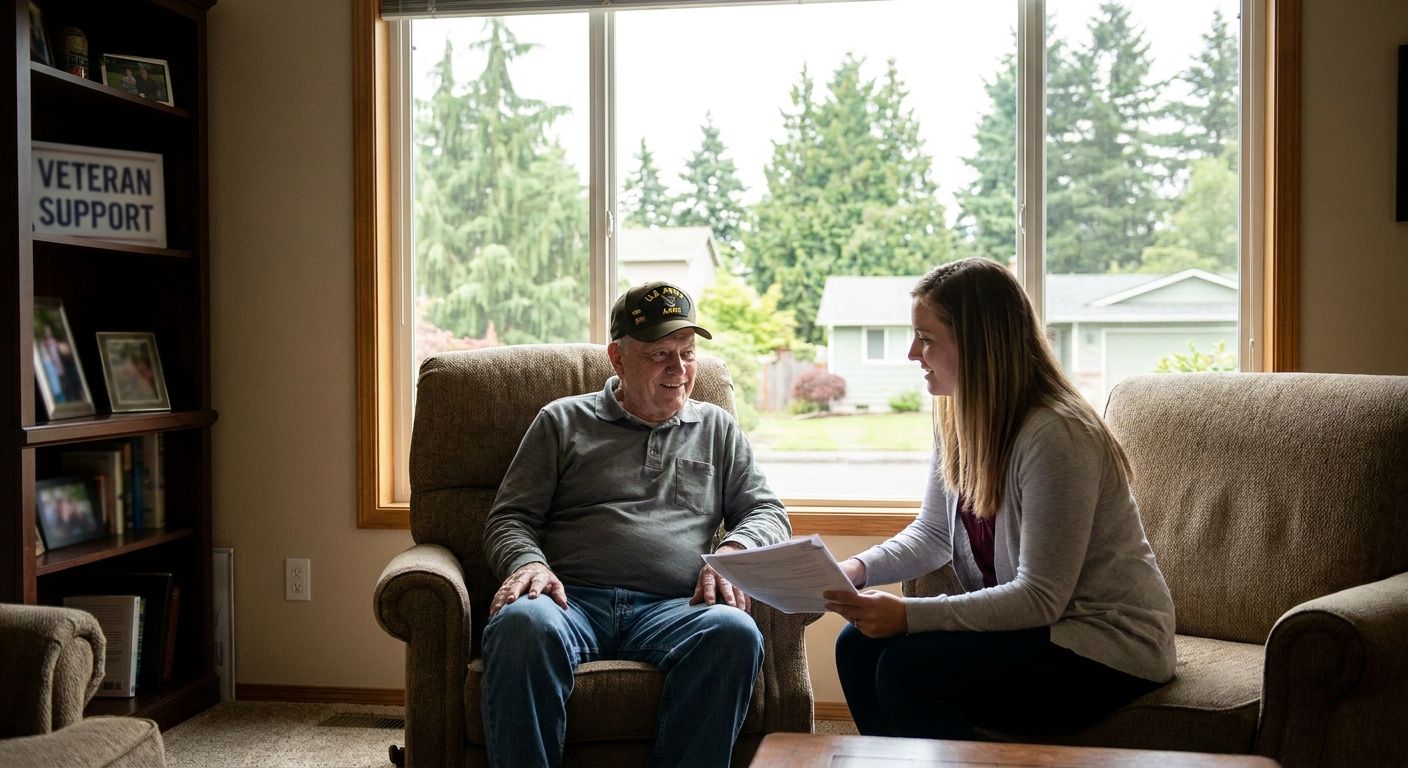
Choosing memory care for a parent or spouse with Alzheimer's is about matching supervision, environment, and routine to a specific stage of the disease — not comparing brochures. This guide walks Salmon Creek and Vancouver, WA families through what actually separates a good fit from a wrong one in 2026.
- Memory care for seniors with Alzheimer's works best in small, secured homes with 24-hour awake staff.
- Essential Living Adult Family Home keeps resident counts low, which tightens supervision compared to larger facilities.
- Sundowning and nighttime wandering need dedicated evening staffing, not just a locked door — verify this before touring.
- Skip any home that treats medication management as paperwork instead of a daily coordinated routine.
Why this matters
Alzheimer's changes what "good care" looks like. A senior with memory loss doesn't just need help with meals and bathing — they need a consistent environment, familiar faces, and someone awake and watching at 2 a.m. when disorientation and wandering are most common.
Generic assisted living is built around independence. Memory care is built around structure, and the two aren't the same product wearing different names. Families who skip this distinction often move a loved one twice — once into a facility that isn't equipped, then again into one that is.
Who this is for
This guide is for adult children and spouses in Clark County who are evaluating private-pay residential care for a loved one with an Alzheimer's diagnosis — whether that's a recent diagnosis with mild confusion, or a parent who's already wandering at night or resisting daily routines. If you're just starting the search, the how to choose an adult family home in Vancouver, WA guide covers the basics before you tour anywhere.
What to look for in memory care for seniors with Alzheimer's
24-hour supervision, not just "staff on call"
Alzheimer's doesn't take breaks at night. Ask directly whether staff are awake and present overnight or simply reachable by phone — those are two very different models, and only one keeps a wandering resident safe at 3 a.m.
A secured, home-like environment
A senior with Alzheimer's needs to feel like they're somewhere familiar, not institutional. Look for a home with a small resident count, quiet common areas, and exits that are secured without feeling like a locked ward.
Personalized, dementia-informed daily routines
A fixed activity schedule for the whole building doesn't work when residents are at different stages. The routine should flex around each resident's habits — same wake time, same seat at breakfast, same caregiver where possible.
Dependable medication coordination
Seniors with Alzheimer's are often managing several conditions at once. What matters is a dependable daily routine — set times, set caregivers, and a clear line of communication with the family about what's happening and when.
Real family communication
You should know what a normal week looks like for your loved one, not just get a call when something changes. Ask how often the home updates families and whether visits are flexible around your schedule, not just posted hours.
A calm approach to sundowning
Late-afternoon agitation and confusion — sundowning — is common with Alzheimer's and it escalates in unfamiliar or noisy settings. A home that's built for it will have quieter evening routines and staff trained to de-escalate rather than restrict.
Top picks by stage and situation
Early-stage Alzheimer's — the early mover
The safe pick for families who see mild memory lapses now and want to get ahead of a crisis later. Essential Living Adult Family Home limits residents to a small group, which means more one-on-one time per caregiver than a 40-bed memory care wing can offer. The concrete detail that matters: a home capped near six residents means routines stay personal instead of scheduled by the clock. Learn more about early-stage dementia care in Vancouver, WA. Verdict: Consider — not urgent, but the right time to tour and plan.
Sundowning and nighttime wandering — the safety pick
This is the scenario families call about after the first 2 a.m. wandering incident. What matters here is awake overnight staff, not a motion sensor. See how memory care for sundowning and nighttime wandering is structured around 24-hour presence and a calmer evening routine. Verdict: Buy — this is the situation memory care exists for.
Advanced-stage and hospice transition — the wildcard
Families often assume advanced Alzheimer's care and hospice are separate moves. They don't have to be. A home built for hospice transition in Vancouver, WA coordinates directly with hospice teams instead of forcing a third relocation during the hardest stretch. Verdict: Buy — one move instead of two matters most at this stage.
Incontinence care needs — the overlooked pick
This stage gets skipped in most memory care comparisons, but it's often what pushes a family to move sooner than planned. Personal hygiene support built into a small-home model, rather than added as an extra fee later, is worth asking about directly during any tour in 2026. Verdict: Buy — confirm it's included in daily care, not billed as an add-on.
See if this is the right fit
Tour Essential Living Adult Family Home in Salmon Creek/Vancouver, WA.
What to avoid
- Large memory care wings with high resident turnover. More beds usually means less consistency in who's caring for your loved one day to day.
- One-size-fits-all activity calendars. If every resident does the same craft at the same hour regardless of stage, the routine is built for the building, not the person.
- Medication management treated as an afterthought. Ask how coordination actually happens day to day — a dependable routine should be described in specifics, not vague reassurance.
Verdict comparison
| Situation | Supervision Level | Environment | Family Involvement | Verdict |
|---|---|---|---|---|
| Early-stage Alzheimer's | Daily check-ins, growing support | Small, home-like, low resident count | Flexible visits, regular updates | Consider |
| Sundowning & nighttime wandering | 24-hour awake staff | Secured, calm evening routine | Notes on evening behavior | Buy |
| Advanced-stage / hospice transition | Continuous hands-on care | Quiet, low-stimulation setting | Direct coordination with hospice team | Buy |
| Incontinence care needs | Scheduled care throughout the day | Private hygiene support built in | Regular care plan reviews | Buy |
FAQ
What is memory care for seniors with Alzheimer's?
Memory care for seniors with Alzheimer's is residential care built around 24-hour supervision, a secured home environment, and daily routines designed for memory loss rather than general independent living. It differs from standard senior care by focusing on safety around wandering, disorientation, and sundowning.
How is memory care different from regular assisted living?
Regular assisted living is built for residents who mostly manage their own schedule, while memory care adds structured routines, a smaller and more secured environment, and staff trained specifically for dementia behaviors. The supervision level is the biggest difference, especially overnight.
When is it time to move a parent with Alzheimer's into memory care?
Most families start looking seriously once wandering, nighttime confusion, or sundowning agitation begins showing up at home. Touring early-stage options before a crisis, like those covered in early-stage dementia care in Vancouver, WA, gives families more time to choose calmly.
What should I look for in a memory care home in Vancouver, WA?
Look for 24-hour awake staff, a small resident count, dependable medication coordination, and regular family communication about daily routines. A home-like setting with a low resident cap, common in Washington adult family homes, usually means more one-on-one attention.
Does memory care help with sundowning and nighttime wandering?
Yes, homes built for sundowning use calmer evening routines and staff who are awake and present overnight, not just reachable by phone. This is one of the clearest differences between memory care and standard senior living.
How does medication management work in a memory care home?
Medication management in memory care is built around a dependable daily routine, with set times and consistent caregivers coordinating with the family. The focus is on reliability and communication, not just administration.
Can a small adult family home provide the same care as a large memory care facility?
A small adult family home, often capped near six residents under Washington state licensing, can provide more consistent one-on-one attention than a large facility with dozens of residents. The tradeoff is fewer group amenities in exchange for a more personal routine.
Is memory care only for late-stage Alzheimer's?
No, memory care fits a range of stages, from early memory lapses to advanced-stage and hospice transition needs. Starting the conversation at the early stage, rather than waiting for a crisis, usually makes the eventual move smoother.
One last thing
Washington state licenses adult family homes to serve a small group of residents, typically in the two-to-six range, which is a very different ratio than a memory care wing built for dozens. That cap is the real reason smaller homes can offer awake overnight staff who actually know each resident's habits by name, not by chart number — worth asking about on any tour in 2026.