Finding a private-pay adult family home for a veteran in Vancouver, WA means matching a small, licensed care setting to a life shaped by military service, not chasing a generic senior living brochure.
- Essential Living Adult Family Home in Salmon Creek/Vancouver, WA offers private-pay residential care sized for one-on-one attention, not a large facility roster.
- A 6-resident adult family home gives more direct caregiver time than a 60-bed community, and that ratio matters most for veterans.
- Veterans managing mobility limitations or blood thinner routines need a home layout and medication rhythm built around those needs from day one.
- Verify WA DSHS licensing and ask about veteran-specific experience before touring a private pay adult family home for veterans in Vancouver, WA in 2026.
Why This Matters for Veteran Families in Vancouver, WA
Veterans deserve care staff who understand military life, and families weighing a private-pay adult family home for a veteran face a narrower, more personal decision than a standard assisted-living search. The home itself is small, often six residents or fewer under Washington's adult family home license, and that scale changes what daily care actually looks like.
An adult family home for veterans in Clark County needs to handle more than daily living tasks. Mobility changes, memory shifts, and steady medication routines tend to show up together as a veteran ages, and one setting has to hold all three without shuffling the resident between providers.
Private-pay status matters here too. Families paying out of pocket, sometimes with help from a VA pension benefit like Aid and Attendance, get to choose based on fit rather than a waitlist, which is exactly why the criteria below carry more weight than any brochure.
How to Weigh the Criteria
The ranking below comes from what actually changes day-to-day life for a veteran inside a private-pay adult family home: staffing structure, memory and mobility support, medication routines, and how smoothly a transition from a hospital or hospice stay gets handled. Washington State licenses adult family homes for up to six residents, a structural fact that shapes every item on this list — a home with six residents runs on a different rhythm than a facility with sixty.
Each criterion below carries a plain verdict: Priority, Consider, or Skip, based on how much it affects daily comfort and safety for a veteran specifically, not the general senior population. Use it as a checklist during your first tour in 2026, not a scorecard to fill out after you've already signed a contract.
The 6 Things to Check in a Private-Pay Adult Family Home for a Veteran
1. Staffing structure and resident count
The hook here: the ratio decides everything else. A licensed adult family home in Washington caps out at six residents, which means caregivers know each person's habits, not just their chart. Ask how many caregivers are on shift at 2 a.m. versus 2 p.m. — nighttime staffing is where large facilities cut corners and small homes usually don't. Priority.
2. Veteran-specific care experience
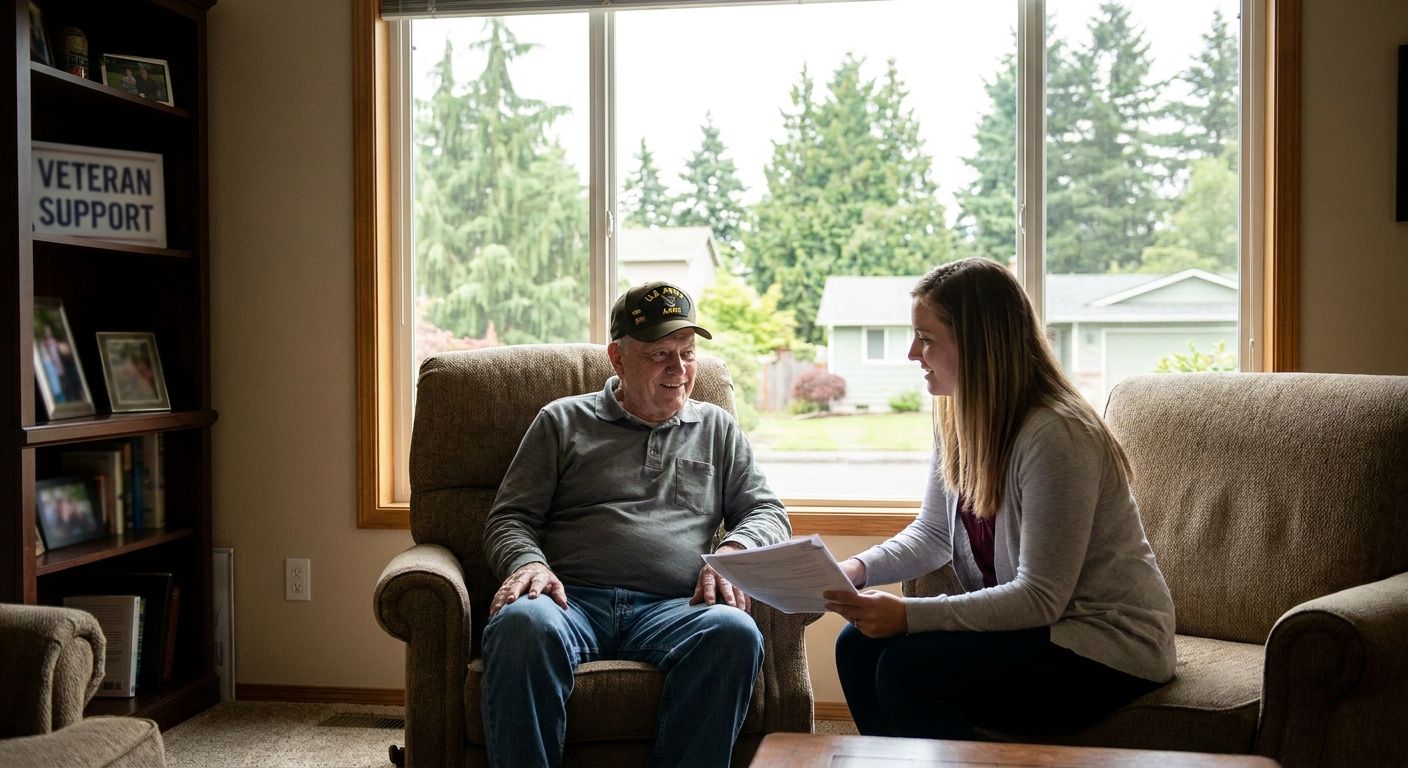
Not every caregiver speaks the language of military routine, rank, or service history, and that gap shows up in small moments — how a caregiver responds to a resident who wakes up disoriented, or how staff talk about a veteran's independence. Ask directly whether the home has supported veterans before and what that looked like day to day. Priority.
3. Memory and dementia care depth
This is the criterion families skip until it becomes urgent. A memory care for early-stage dementia approach means staff redirect confusion calmly instead of correcting it, and keep routines consistent enough that a veteran doesn't feel lost in his or her own home. If any cognitive change is present, this moves from nice-to-have to non-negotiable. Priority if cognitive changes exist, Consider otherwise.
4. Medication routine and coordination
The daily rhythm that keeps everything else stable is a dependable medication schedule, not a rigid clinical process. Many veterans manage cardiac conditions or take blood thinners as part of long-term care, so ask how the home times doses around meals and activity and how it communicates refill needs to family. A steady medication management for seniors on blood thinners routine gives families peace of mind without turning medication into a point of anxiety. Priority.
5. Mobility and fall-safety layout
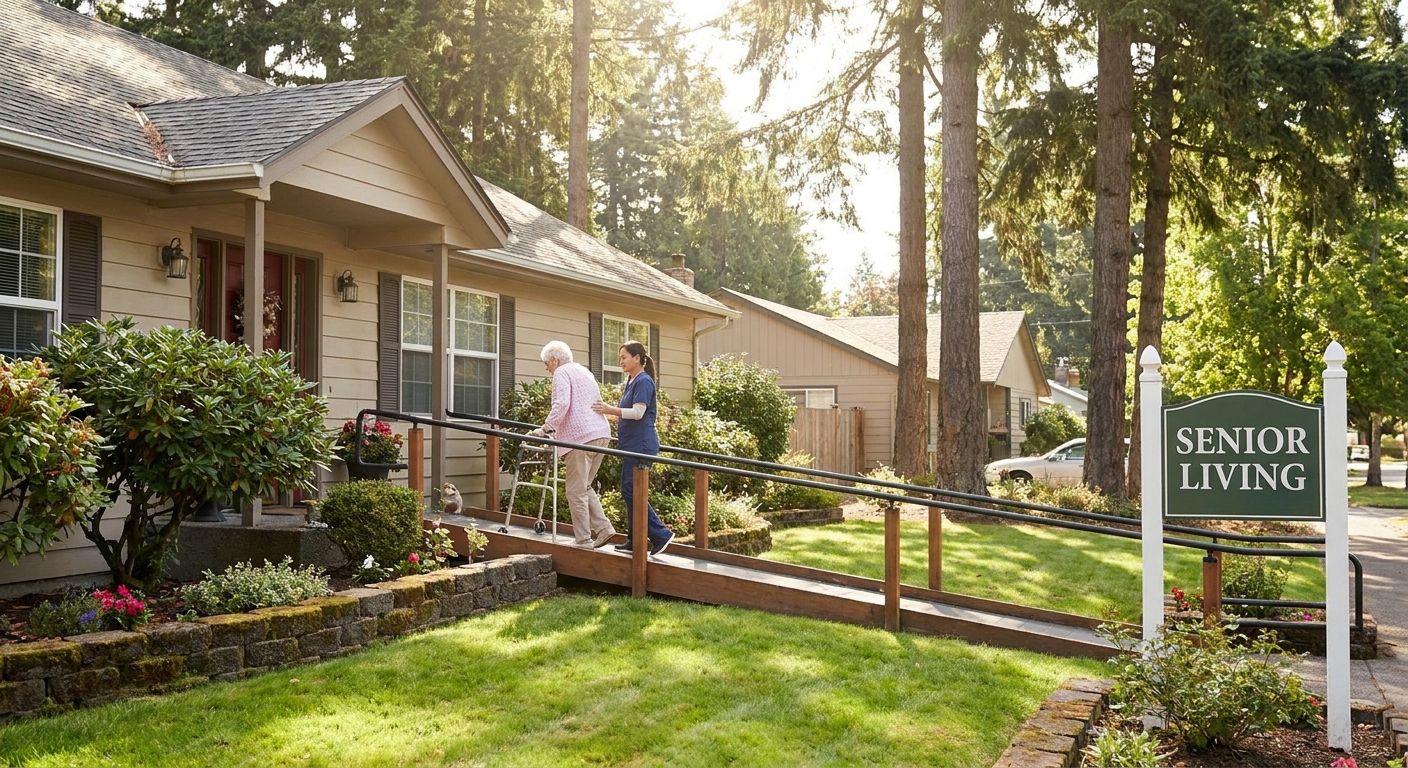
The floor plan either helps a veteran or works against him. A single-level home with wide doorways, grab bars, and no tight turns for a walker or wheelchair matters more than square footage. If service-related mobility limitations are part of the picture, an adult family home for seniors with mobility limitations layout should be verified in person, not assumed from photos. Priority for mobility-limited veterans, Consider otherwise.
6. Transition and respite flexibility
What happens after the hospital discharge call matters as much as anything on this list. A home that can take a resident directly from a hospital or hospice stay — and one that offers respite stays so a family caregiver can rest without guilt — solves problems most families don't anticipate until they're already in crisis mode. Consider.
Schedule a private tour
See the home, meet the caregivers, ask about veteran experience directly.
Side-by-Side: What to Check Before You Sign
| Criterion | What to Ask | Priority for Veterans |
|---|---|---|
| Staffing ratio | How many residents share a caregiver overnight? | Priority |
| Veteran experience | Has staff cared for veterans before? | Priority |
| Memory care depth | How do you handle confusion or nighttime wandering? | Priority if cognitive changes present |
| Medication routine | How do you coordinate timing and refills? | Priority |
| Mobility layout | Is the home single-level with wide doorways? | Priority if mobility-limited |
| Transition support | Can a resident move in directly from hospital discharge? | Consider |
Where to Start Your Search
Three rules keep the search from dragging on for months:
- Verify the WA DSHS adult family home license number directly with the state before booking a tour.
- Tour in person and ask to meet whichever caregiver is on shift that day, not only the owner.
- Ask specifically how the home has supported veterans before — the answer tells you more than any brochure ever will.
A private-pay adult family home for a veteran in Vancouver, WA works best when the family treats the tour like due diligence, not a formality.
FAQ
What is a private-pay adult family home?
A private-pay adult family home is a small, licensed residential care setting, capped at six residents in Washington State, where families cover the cost directly rather than through a public program. It offers 24-hour care, meals, and daily living support in a home-like setting instead of a large institutional building.
How is an adult family home different from assisted living for a veteran?
An adult family home houses far fewer residents than most assisted living communities, which means more direct caregiver attention per person. For a veteran adjusting to memory or mobility changes, that smaller scale often makes daily routines easier to manage.
Does a private-pay adult family home work with VA benefits?
Some private-pay families use a VA pension benefit like Aid and Attendance to help offset costs, though the home itself is paid for privately rather than billed to a government program. Ask each home directly how they support families using VA benefits alongside private payment.
How many residents live in a typical adult family home in Vancouver, WA?
Washington State licenses adult family homes for up to six residents. That cap is what separates this care model from larger assisted living or memory care facilities.
What should a veteran's family ask about medication management?
Ask how the home times doses around meals and daily activity, and how it communicates refill needs and schedule changes to family members. A dependable routine, not a rigid clinical process, is the sign of a home that manages medication well.
Is memory care available in a private-pay adult family home?
Yes, many private-pay adult family homes offer memory care support for early-stage dementia and related cognitive changes. Ask specifically how staff redirect confusion and maintain consistent routines, since that consistency matters more than any single feature of the building.
How much does private-pay adult family home care cost in Vancouver, WA in 2026?
Costs vary by care level and room arrangement, so ask each home directly for current 2026 rates rather than relying on outdated online estimates. Private-pay pricing typically reflects the level of one-on-one support a resident needs.
Can a veteran transition directly from a hospital stay into an adult family home?
Many adult family homes accept residents directly from hospital or hospice discharge, which avoids an unnecessary stop at a rehab facility. Ask about this specifically during a tour, since not every home is set up to handle a same-week transition.
One Last Thing
The detail most families miss on a first tour: ask what happens on the caregiver's day off. A private-pay adult family home run by a small, stable staff — not a rotating cast of agency workers — is often the single biggest difference between a home that feels like family and one that doesn't. Essential Living Adult Family Home's whole model rests on that consistency, and it's worth asking any home you tour in 2026 the same question.