Choosing an adult family home for seniors with mobility limitations comes down to layout, staffing, and daily routines — not curb appeal or a long amenities list.
- Essential Living Adult Family Home in Salmon Creek/Vancouver, WA runs a single-level layout built for seniors with mobility limitations — priority pick for 2026.
- Washington state caps adult family home licenses at six residents, so staff attention beats a 50-room assisted living wing.
- Coordinated medication routines and hands-on transfer help matter more than square footage when falls are the daily risk.
- Skip any home marketing split-level floor plans or narrow 'cozy' hallways if a resident uses a walker, cane, or wheelchair.
Why this matters
Mobility limitations change what "good care" looks like. A resident who needs help standing from a chair or navigating a hallway with a walker is exposed to risk the moment a home wasn't designed around that reality.
Large assisted living communities often solve this with elevators and long corridors. That works for some seniors, but it also means staff cover more residents across more square footage. An adult family home flips that ratio: fewer residents, one level, and staff who know exactly how each person transfers, walks, and manages their day.
The difference shows up in small moments — how fast someone gets help getting to the bathroom at 2 a.m., whether a wheelchair fits through a doorway without a three-point turn, whether staff know a resident's gait has changed this week. Those details decide whether 2026 is a year of steady routine or a year of preventable falls.
Who this is for
This guide is for adult children and family members in Clark County researching residential care for a parent or spouse who uses a walker, cane, or wheelchair, has had a recent fall, is recovering from a joint replacement, or has balance issues tied to Parkinson's, stroke, or general frailty. If the family is choosing between a large assisted living campus and a small residential home, this comparison is built for that decision.
What to look for in an adult family home for seniors with mobility limitations
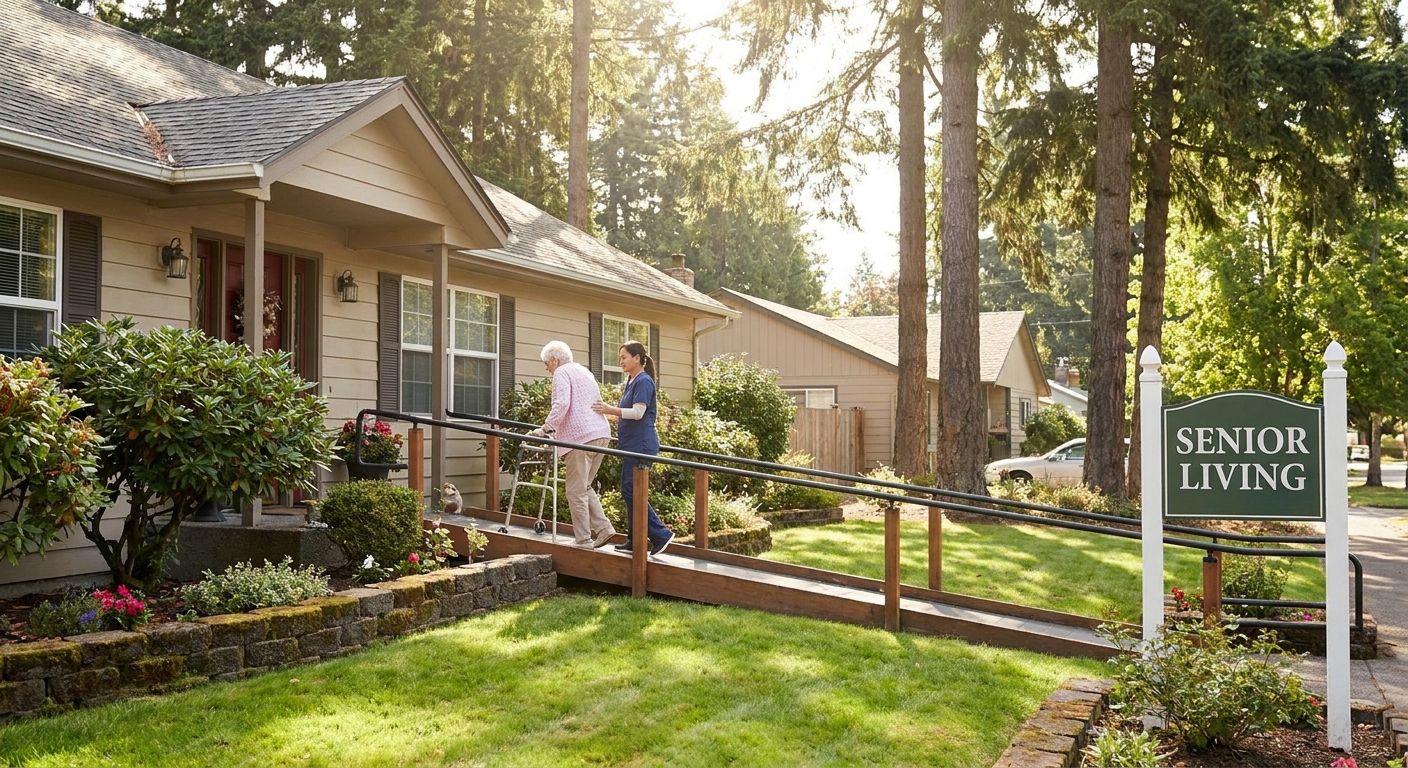
Single-level, zero-step layout
Stairs and split levels are the single biggest architectural risk factor for a resident with limited mobility. A one-story home with zero-step entries removes the need for a resident to ever navigate stairs to reach a bedroom, bathroom, or common area.
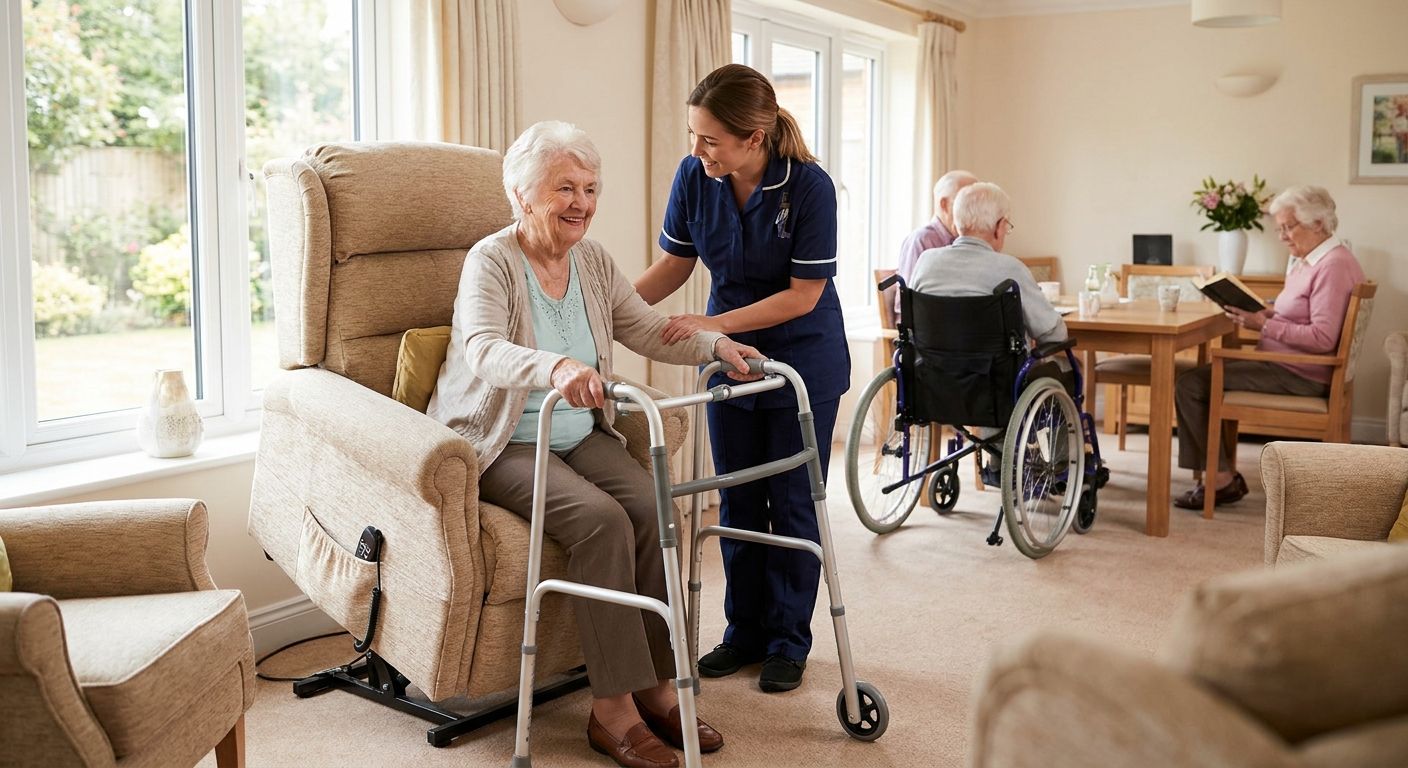
Hands-on transfer assistance around the clock
Most mobility-related falls happen during transfers — bed to chair, chair to standing, standing to walker. Staff need to be present and trained for these moments at any hour, not just during scheduled check-ins.
Coordinated medication routines
A resident managing multiple conditions benefits from a dependable, coordinated medication schedule that staff track consistently day to day. This kind of routine, handled well for seniors with diabetes and similar chronic needs, gives families one less thing to track from home.
Recovery support after a hospital stay or surgery
Mobility limitations often start with a hip fracture, joint replacement, or hospitalization. A home that offers structured recovery support after a hospital discharge helps a resident rebuild strength and confidence instead of losing ground during the transition home.
Small household staff ratio
Washington state licenses adult family homes for up to six residents. That cap means staff in a home like this are working with a handful of people, not dozens, which translates directly into faster response times for someone who needs help standing or walking.
Family communication and personalized care plans
A family should know, without asking twice, how a parent's mobility is trending week to week. Homes built around small households tend to communicate this more naturally than large facilities managing hundreds of residents across shifts.
Where Essential Living AFH fits for mobility-limited residents
The no-stairs advantage. Essential Living Adult Family Home operates as a single-level residence, so a resident with a walker or wheelchair never has to navigate stairs to reach a bedroom or common area. For a household capped at six residents under Washington's adult family home license, that layout choice removes one of the most common fall triggers entirely. Priority.
The safe-transfer pick. Overnight and daytime staff are present for hands-on help with transfers, not just scheduled check-ins. For a resident whose biggest daily risk is standing up or sitting down unassisted, staff presence around the clock is the feature that matters most in 2026. Priority.
The steady-routine pick. Medication routines are coordinated and tracked consistently, which matters for residents whose mobility is tied to chronic condition management, like diabetes-related nerve or circulation issues. Families get a dependable schedule instead of piecing it together themselves. Priority.
The recovery bridge pick. For a resident coming home after a hip replacement, fall, or extended hospital stay, structured post-hospital recovery support gives staff a plan for rebuilding strength safely rather than leaving that work to chance. This pick matters most in the weeks right after discharge — not every family needs it on day one. Consider.
See if Essential Living AFH fits your family
Tour the Salmon Creek/Vancouver, WA home and ask about mobility-specific routines.
What to avoid
- Split-level or multi-story homes marketed as "charming." A staircase between the entry and bedrooms is a daily hazard, no matter how the listing photos look.
- Large assisted living wings with long hallways. More square footage per resident sounds appealing until it means longer waits for hands-on help during a transfer.
- Vague answers about staff-to-resident ratio. If a facility can't tell you plainly how many residents each staff member is responsible for during an overnight shift, that's a sign to keep looking.
Verdict comparison
| Criteria | Small adult family home (6-resident cap) | Large assisted living community |
|---|---|---|
| Layout | Single-level, zero-step | Often multi-floor with elevators |
| Staff attention | Small household, fast response | Spread across dozens of residents |
| Medication routine | Coordinated, consistent tracking | Varies by shift and staff turnover |
| Post-hospital recovery support | Built into daily care plan | Often a separate add-on service |
| Family communication | Direct, day-to-day | Filtered through larger administration |
FAQ
What is the best adult family home for seniors with mobility limitations in Vancouver, WA?
A single-level home with a small resident count and staff trained for hands-on transfers is the strongest fit for mobility limitations. Essential Living Adult Family Home in Salmon Creek/Vancouver, WA is built around this exact layout for 2026.
Is an adult family home better than assisted living for seniors who use a wheelchair?
For a wheelchair user, a small adult family home often works better because staff manage fewer residents and the layout is typically single-level. Assisted living communities can work too, but hallway length and staff ratio vary widely by facility.
How many residents live in a Washington adult family home?
Washington state licenses adult family homes for up to six residents. That cap is what allows staff to give more direct, hands-on attention compared to larger care communities.
Does an adult family home help with medication routines?
Yes, a well-run adult family home tracks medication schedules consistently as part of daily care, giving families a dependable routine to rely on. This is especially useful for residents managing chronic conditions alongside mobility limitations.
Can a senior recovering from surgery move into an adult family home?
Yes, many families move a parent into an adult family home directly after a hospital stay or surgery to rebuild strength in a supervised setting. Look for a home that specifically supports post-hospital recovery rather than general daily care only.
What questions should I ask about mobility support before touring a home?
Ask how many staff are on shift overnight, how transfers are handled, and whether the layout is single-level. A home that answers these specifically, rather than generally, is usually better prepared for mobility limitations.
Are single-level homes safer for seniors with balance issues?
Yes, removing stairs eliminates one of the most common fall triggers for seniors with balance or gait issues. A zero-step entry and single-level floor plan reduce daily risk significantly compared to multi-story housing.
One last thing
Most families comparing care options focus on amenities and forget to ask about the resident cap. Washington's six-resident limit on adult family homes is the detail that actually predicts how fast someone gets help standing up at 2 a.m. in 2026 — not the size of the common room.