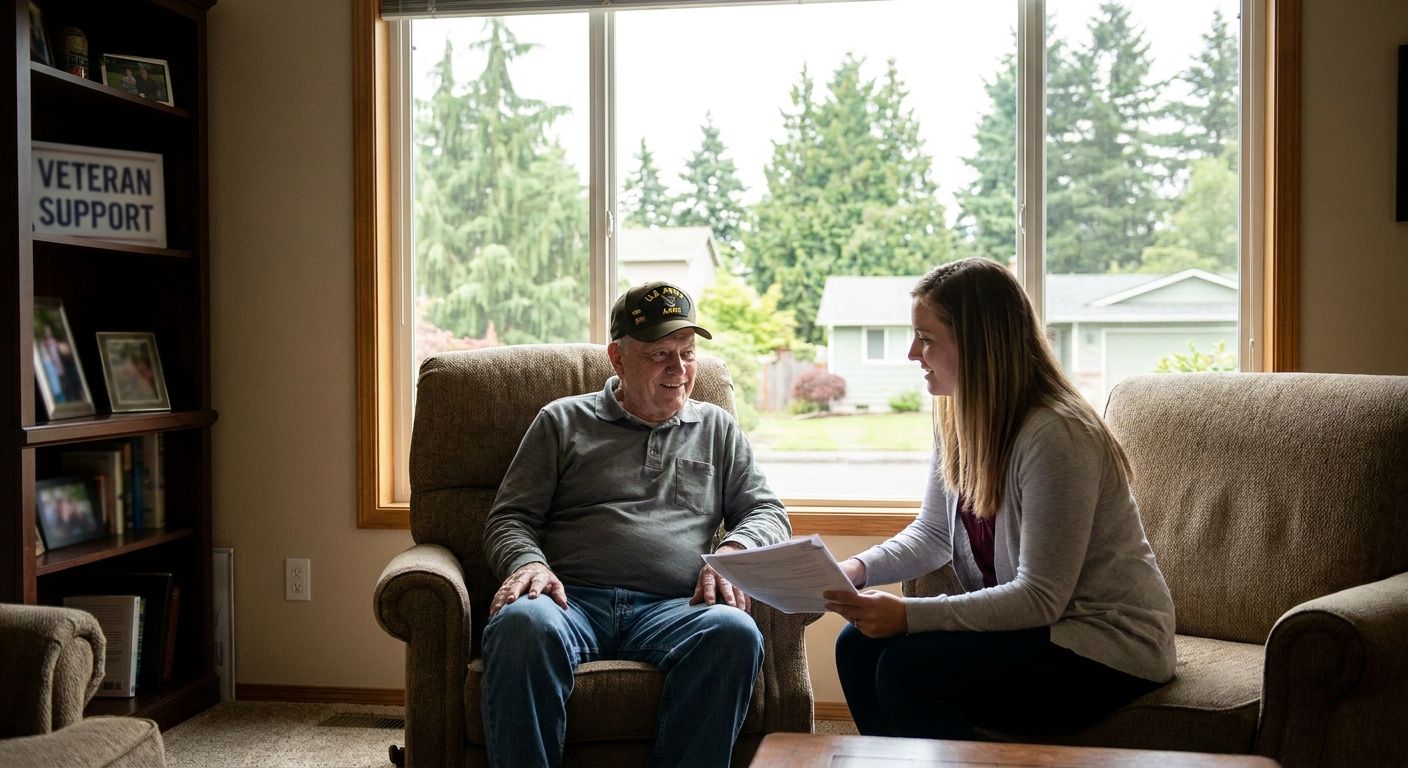
Bringing a parent home from the hospital only to watch them bounce back to the ER is one of the most common fears families face after a fall, stroke, or surgery. This guide breaks down what 24 hour senior care for post-hospital recovery actually requires, who needs it, and which care settings deliver it safely.
- 24 hour senior care post-hospital recovery works best in a setting with a fixed caregiver-to-resident ratio, not a rotating home health schedule.
- Essential Living Adult Family Home in Salmon Creek/Vancouver, WA is a strong Buy for families needing round-the-clock supervision plus medication management.
- Skip solo family caregiving in the first 2-4 weeks after discharge unless a trained caregiver is on-site around the clock.
- Washington State caps adult family homes at 6 residents, which means more staff attention per person than most assisted living floors.
Why this matters
Hospitals discharge patients faster than families expect, often while a parent still can't safely walk to the bathroom alone or manage a new medication list. National data shows roughly 1 in 5 hospitalized Medicare patients get readmitted within 30 days, and falls at home are one of the top drivers. A setting built for 24 hour senior care closes that gap by keeping a trained caregiver present at every hour, not just during scheduled visits.
The decision families face in 2026 usually comes down to three options: hire rotating home health aides, book a skilled nursing facility bed, or move a parent into a licensed adult family home. Each has a real cost, a real staffing model, and a real answer to "what happens at 3am."
Who this is for
This guide is for adult children and spouses arranging care for a senior discharged after a hip fracture, stroke, cardiac event, or major surgery, who needs supervision, medication management, and help with daily living tasks for weeks or months rather than days. It's also for families already exhausted by a first attempt at solo caregiving who need a licensed setting instead of a patchwork schedule.
What to look for in 24 hour senior care for post-hospital recovery
Fixed caregiver ratios, not rotating shifts
A home health agency sends a different aide on a rotating schedule, which means no single person tracks whether swelling in an ankle is new or whether a medication dose was missed yesterday. A setting with a small, fixed resident count keeps the same caregivers present shift after shift, so changes in condition get caught fast.
Medication management, not just reminders
Post-surgical and post-stroke patients often leave the hospital with 5 to 10 new prescriptions and a schedule that changes twice in the first month. Look for a caregiver team that administers and logs medications directly, not one that just sets a pill organizer and hopes.
Mobility and fall-prevention support
Most post-hospital readmissions trace back to a fall or a wound complication that went unnoticed for hours. A setting with 24-hour staff physically present catches a stumble in real time instead of finding out during a scheduled check-in.
Nutrition tailored to recovery, not a general menu
Healing from surgery or a cardiac event requires protein intake and fluid management that a generic senior living dining hall doesn't always track per resident. Ask whether meals are planned around each resident's recovery needs or served the same to everyone.
Communication with family and physicians
Recovery isn't linear — a parent can look fine on Monday and spike a fever by Wednesday. The care setting should call family and coordinate with the discharging physician or home health nurse without being asked twice.
Licensing and staff-to-resident math
Washington State licenses adult family homes for a maximum of 6 residents per home, which puts staff attention on a different scale than a 40-bed assisted living wing. Confirm the license type and the actual resident count before signing anything.
Top picks for post-hospital recovery care
Adult family home care — the steady pick. Essential Living Adult Family Home operates under Washington's 6-resident cap, providing 24-hour residential care, medication management, and daily living assistance in a home setting in Salmon Creek/Vancouver, WA. For a parent who needs supervision around the clock plus memory or dementia support, this model puts fewer residents per caregiver than most assisted living communities. Verdict: Buy for families who want continuous oversight without an institutional feel.
Skilled nursing facility (SNF) rehab stay — the safe short-term pick. Medicare covers up to 100 days per benefit period in a skilled nursing facility following a qualifying hospital stay, which makes it a reasonable bridge for intensive physical therapy right after surgery. It's built for short, clinical rehab, not for ongoing daily living support once therapy goals are met. Verdict: Consider as a first 2-4 week stop before a longer-term care decision.
Home health aides on a rotating schedule — the wildcard. Home health can work for a parent who mostly needs light assistance and has a spouse or family member present the rest of the day. Without someone on-site at night, a fall or medication error between visits can go unnoticed for hours. Verdict: Consider only when a family member can genuinely cover the gaps.
Solo family caregiving — the risky pick. Adult children often try to manage recovery alone for the first few weeks, sleeping in shifts and calling out from work. The physical demands of transfers, wound care, and medication timing catch up fast, and caregiver burnout is one of the most common reasons families end up searching for 24 hour senior care for post-hospital recovery in the first place. Verdict: Skip as a long-term plan for anyone recovering from a major hospitalization.
Large assisted living community — the mismatch. A big community can offer amenities and social programming, but staff typically cover far more residents per caregiver than a licensed adult family home. For a parent needing close post-surgical monitoring, that ratio works against fast response times. Verdict: Skip for the first 60 days of recovery; Consider later once the medical picture stabilizes.
Talk through your parent's discharge plan
Get a straight answer on whether 24-hour care fits your situation.
What to avoid
- A facility that can't state its actual caregiver-to-resident ratio. If the answer is vague, the staffing is probably thinner than advertised.
- A short-term rehab plan with no discharge conversation. A 100-day Medicare SNF benefit runs out, and families who don't plan the next step end up scrambling at day 90.
- A setting that treats medication management as optional. Post-hospital patients on new drug regimens need administration and logging, not a pill organizer on a shelf.
Verdict comparison
| Option | Best for | Staffing model | Verdict |
|---|---|---|---|
| Adult family home (Essential Living) | 24-hour supervision, memory/dementia support | Small home, 6-resident cap in WA | Buy |
| Skilled nursing facility | Short-term intensive rehab | Clinical staff, Medicare-covered up to 100 days | Consider |
| Home health aides | Light assistance with family backup | Rotating scheduled visits | Consider |
| Large assisted living | Stable seniors, social amenities | Higher resident-per-caregiver ratio | Skip early recovery |
| Solo family caregiving | Very mild, short recovery only | One or two family members | Skip for major hospitalizations |
FAQ
What is 24 hour senior care for post-hospital recovery?
It's continuous supervision, medication management, and daily living assistance for a senior discharged from the hospital, delivered by caregivers present around the clock rather than on scheduled visits. It's typically used after a fall, stroke, surgery, or cardiac event when a parent can't safely be alone.
How long does a senior typically need 24-hour care after hospitalization?
Recovery timelines vary by condition, but many post-surgical and post-stroke patients need close supervision for 4 to 12 weeks before independence returns, if it returns fully. Some seniors, especially those with memory or dementia needs, require ongoing residential care beyond the recovery window.
Is an adult family home better than a skilled nursing facility for recovery?
A skilled nursing facility fits intensive, short-term rehab covered by Medicare for up to 100 days per benefit period, while an adult family home fits ongoing daily supervision, medication management, and a home setting once acute rehab goals are met. Many families use a SNF first, then move to an adult family home.
How much does 24 hour senior care cost in 2026?
Costs vary by location, level of care, and whether memory support is needed, so check current rates directly with the care provider. Adult family homes generally price based on the resident's care needs rather than a flat community rate.
What's the difference between home health and 24 hour residential care?
Home health sends aides on a scheduled, rotating basis, leaving gaps between visits, while 24 hour residential care keeps trained caregivers on-site continuously. For seniors at fall risk or on new medications after discharge, the continuous model catches problems faster.
Does Medicare cover 24 hour senior care after a hospital stay?
Medicare covers up to 100 days of skilled nursing facility care per benefit period following a qualifying hospital stay, but it does not typically cover long-term residential or custodial care like an adult family home. Families should confirm coverage details directly with Medicare or a discharge planner.
How many residents does Washington State allow in an adult family home?
Washington State licenses adult family homes for a maximum of 6 residents per home. That cap is why staffing ratios in a licensed adult family home tend to be tighter than in larger assisted living communities.
What questions should I ask before choosing a post-hospital care setting?
Ask for the exact caregiver-to-resident ratio, how medications are administered and logged, how falls and condition changes are communicated to family, and whether staff coordinate directly with the discharging physician. A setting that answers all four clearly is worth serious consideration.
One last thing
The detail families miss most often: a 100-day Medicare skilled nursing benefit sounds generous until day 85 arrives with no discharge plan in place. Start the conversation about what comes after rehab in the first week of a SNF stay, not the last, so the move to 24 hour senior care for post-hospital recovery — whether that's an adult family home or another setting — happens on your schedule instead of a discharge planner's deadline.