Managing insulin timing, blood sugar checks, and multiple daily medications gets harder as a parent ages, and a missed dose or delayed glucose check can turn into a hospital trip fast. This guide breaks down what real medication management for seniors with diabetes looks like, which care settings actually deliver it, and which ones just say they do.
- 24-hour adult family home care wins for insulin-dependent seniors — staff are present overnight, not on a visit schedule.
- Home health nursing visits a few times a week don't cover multiple daily insulin doses; consider only for stable oral-medication routines.
- Essential Living Adult Family Home in Salmon Creek/Vancouver, WA builds glucose checks and dosing into daily routines around the clock.
- Assisted living communities often limit staff to reminders, not hands-on administration — verify this before signing anything.
Why this matters
Nearly 30% of adults over 65 live with diabetes, according to CDC data, and most of them are managing it alongside at least one other chronic condition. Insulin and glucose control aren't forgiving of gaps: a skipped evening dose or an unnoticed low blood sugar overnight can mean confusion, a fall, or an ER visit by morning.
The difference between a good outcome and a bad one usually isn't the medication itself. It's whether someone reliable is watching the timing, the numbers, and the warning signs every single day, including at 2 a.m.
Who this is for
This guide is for adult children and spouses trying to figure out how their loved one's diabetes medications get managed once independent living stops being safe. If mom is skipping insulin doses because she forgot, or dad's blood sugar has been swinging low overnight without anyone catching it, you're the reader this is written for. Essential Living Adult Family Home in Salmon Creek/Vancouver, WA, was built around exactly this problem: seniors who need daily medication oversight, not just a reminder call.
What to look for in medication management for seniors with diabetes
Staff present around the clock, not on a schedule
Insulin doses and glucose checks don't happen on banker's hours. A caregiver who's off-site overnight can't catch a 3 a.m. low blood sugar or administer a nighttime dose on time, and that gap is where most diabetes-related emergencies in seniors actually happen.
Direct medication administration, not just reminders
"Medication management" gets used loosely. Ask whether staff physically administer insulin and check glucose levels, or whether they just remind the resident to do it themselves — those are two very different levels of care for someone with cognitive decline or dexterity issues.
Coordination with physicians and pharmacists
Diabetes regimens change often: a new A1C reading can mean a dosage adjustment within days. Care that includes ongoing communication with the resident's doctor and pharmacist catches those changes faster than a family member juggling phone calls between specialists.
Staff trained to recognize hypo- and hyperglycemia
Symptoms of low blood sugar (below 70 mg/dL) in seniors — confusion, sweating, irritability — get mistaken for dementia or fatigue by untrained caregivers. Staff who know the difference catch problems before they become emergencies.
Meal timing built around medication schedule
Insulin and many oral diabetes medications depend on consistent meal timing. A care setting that plans meals around dosing schedules, rather than the other way around, keeps blood sugar more stable day to day.
Documentation families can actually see
You want to know what dad's glucose readings looked like this week, not guess. Care settings that track and share this information keep families informed instead of finding out about a problem after it's already happened.
Care setting options for diabetes medication management
24-hour adult family home care — the steady option
A licensed adult family home like Essential Living Adult Family Home keeps staff on-site around the clock in a small residential setting, typically with a much lower resident-to-caregiver ratio than larger facilities. Insulin timing, glucose checks, and meal coordination happen as part of the daily routine rather than a scheduled visit. Verdict: Buy for anyone on insulin or multiple daily diabetes medications.
Family or in-home caregiving — the familiar option
A spouse or adult child managing medications at home works fine early on, when the regimen is simple and stable. It breaks down fast once insulin dosing gets more frequent or the caregiver has their own job and family to manage. Verdict: Consider for early-stage, oral-medication-only diabetes; Skip once overnight insulin or unpredictable glucose swings enter the picture.
Assisted living community — the middle ground
Many assisted living communities offer medication reminders but limit hands-on administration to residents who are still capable of self-administering with prompting. Staff-to-resident ratios also tend to be higher than in a residential adult family home. Verdict: Consider, but confirm in writing exactly what "medication management" includes before signing a lease.
Home health nursing visits — the scheduled option
A home health nurse checks in a few times a week to review medications and vitals, which works for someone on a stable, infrequent medication schedule. It does not cover multiple daily insulin doses or overnight glucose monitoring, because the nurse isn't there between visits. Verdict: Skip for insulin-dependent seniors; Consider for stable, oral-only regimens with a family member handling day-to-day dosing.
Talk through your loved one's care needs
See how daily medication management works at Essential Living Adult Family Home.
What to avoid
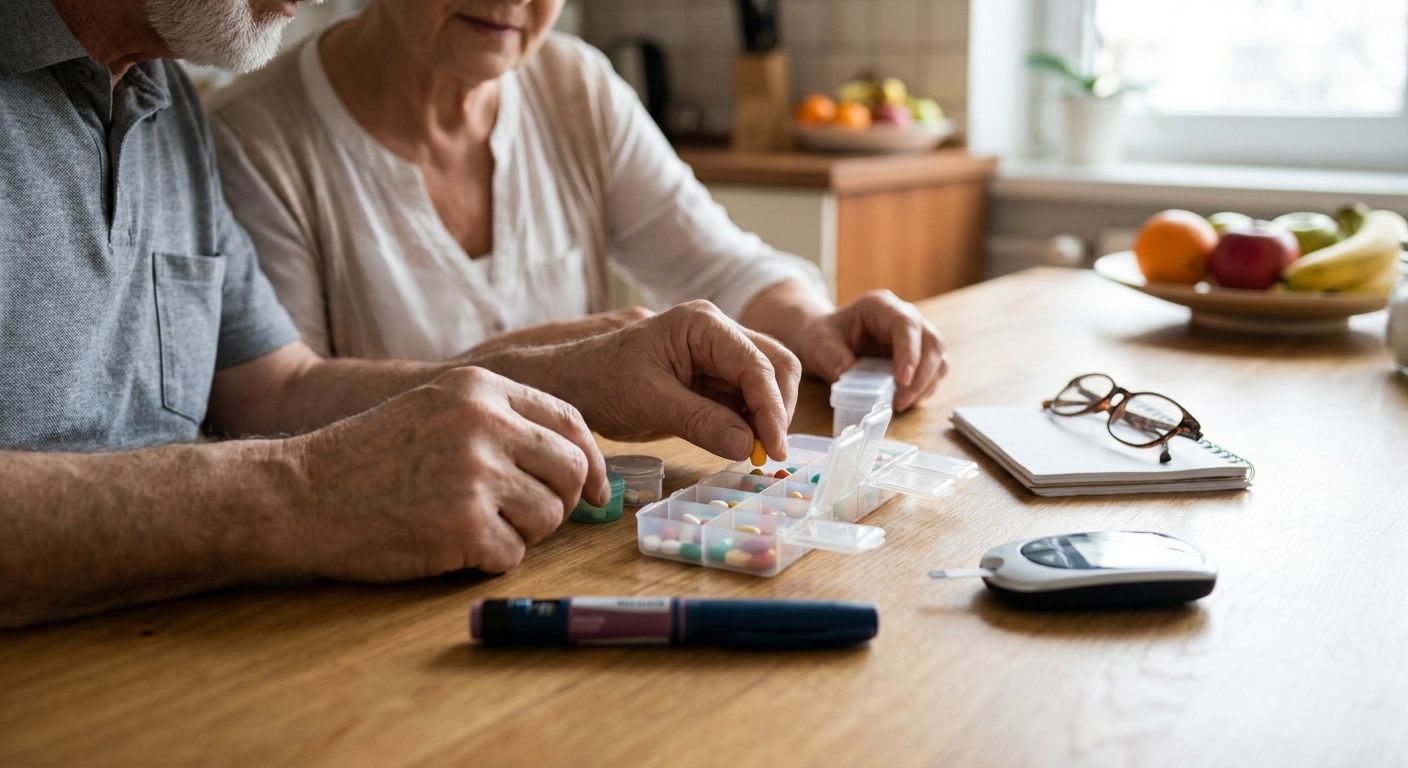
- "Reminder-only" services labeled as medication management. A reminder call or a pill organizer isn't administration — it doesn't catch a missed insulin dose or a low glucose reading.
- Facilities without overnight staff. If nobody's awake and present after 10 p.m., nobody's checking blood sugar or administering a bedtime dose.
- Rotating, unfamiliar caregivers. Home care agencies that send a different aide every visit increase the odds of a missed step in an insulin routine, simply because nobody knows the resident's baseline.
Verdict comparison
| Care Setting | Overnight Coverage | Hands-On Administration | Best For | Verdict |
|---|---|---|---|---|
| Adult family home (24-hour) | Yes | Yes | Insulin-dependent, multiple daily meds | Buy |
| Family/in-home care | No (usually) | Varies | Early-stage, oral meds only | Consider |
| Assisted living | Limited | Often reminders only | Stable, self-capable residents | Consider |
| Home health visits | No | Scheduled visits only | Infrequent, stable regimens | Skip for insulin |
A 24-hour adult family home setting is the only option on this table with both overnight coverage and hands-on administration built in as standard, which is why it's the right call once insulin or multiple daily doses are involved in 2026.
FAQ
What is medication management for seniors with diabetes?
It's the ongoing process of administering insulin or oral diabetes medications on schedule, checking blood glucose levels, and adjusting care based on those readings. For seniors, this typically also includes coordination with their doctor and tracking symptoms of high or low blood sugar.
Is a 24-hour adult family home better than home health visits for diabetes care?
For insulin-dependent seniors, yes — home health nurses typically visit a few times a week, which doesn't cover daily or multiple-times-daily dosing. A 24-hour adult family home has staff present around the clock to handle timing and overnight glucose checks.
How much does memory care or medication management cost for a senior with diabetes?
Costs vary by location, level of care needed, and whether the setting is a home care agency, assisted living community, or adult family home. Contact the specific provider for current rates, since pricing structures differ widely.
Can assisted living facilities administer insulin?
Some can, but many limit staff to reminders and self-administration support rather than hands-on injections. Ask directly what level of administration is included before choosing a community.
What are signs of low blood sugar in an elderly person?
Confusion, sweating, shakiness, and irritability are common signs of low blood sugar, generally defined as below 70 mg/dL. These symptoms are often mistaken for dementia or fatigue by untrained caregivers, which is why staff training matters.
Does an adult family home coordinate with the resident's doctor?
Yes, ongoing coordination with physicians and pharmacists is a standard part of medication management in a well-run adult family home. This matters for diabetes care specifically because dosages change often based on A1C results and glucose trends.
What's the difference between medication reminders and medication administration?
A reminder just prompts the resident to take their own medication, while administration means staff physically handle the dose, including insulin injections. For seniors with cognitive decline or dexterity issues, administration is the safer standard.
One last thing
The question that trips up most families isn't "does this place offer medication management" — every brochure says yes. Ask instead: "who administers the insulin at 7 a.m. and who checks blood sugar at 2 a.m." If the answer involves a scheduled visit or a self-administration reminder, that's not full coverage for an insulin-dependent senior. A 24-hour adult family home like Essential Living Adult Family Home is built to answer both parts of that question the same way, every day of 2026.