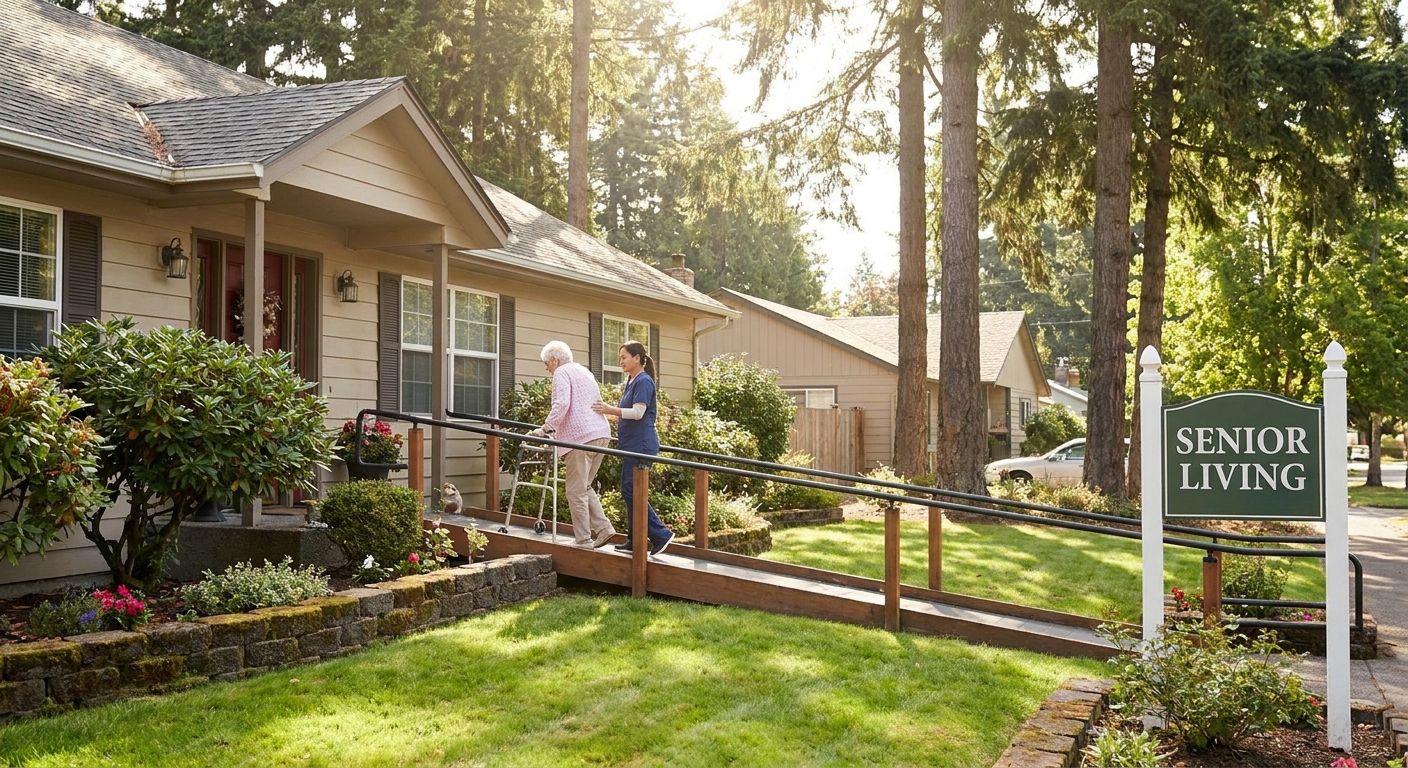
Wandering is the single scariest word a family hears after a dementia diagnosis, and in 2026, Clark County families are weighing adult family homes against big memory care communities to figure out which setting actually keeps a wandering-risk senior safe.
- Small adult family homes with six or fewer residents give wandering-risk seniors far closer supervision than large memory care communities — this is the strongest pick for daily safety.
- Essential Living Adult Family Home in Salmon Creek/Vancouver, WA specializes in sundowning and nighttime wandering support inside a licensed six-resident home. Buy.
- In-home care with a single hired aide struggles to cover nighttime wandering and shift changes — treat this as a Skip for anyone with an active wandering history.
- Standard assisted living without secured memory care is a mismatch for wandering-risk seniors in Clark County in 2026 and should be avoided.
Why this matters
A senior who wanders doesn't just get confused for a minute — they can walk out a door, down a street, or into traffic before anyone notices they're gone. Families searching for the best memory care homes for wandering-risk seniors in Clark County aren't shopping for amenities; they're shopping for supervision, secured exits, and staff who recognize sundowning before it turns into an exit-seeking episode.
The setting matters more than the brochure. A home built around memory care for nighttime wandering and sundowning is built differently than a general assisted living wing that added a dementia unit as an afterthought. Ratio, layout, and staff training separate the settings that actually prevent an elopement from the ones that just document one after it happens.
How this list is built
This ranking compares the care settings available to Clark County families in 2026 against the specific risk factors that matter for wandering: staff-to-resident ratio, secured egress, nighttime coverage, and how quickly staff notice a resident is missing from their room or common area.
It weighs small, licensed adult family homes against large secured memory care communities, in-home care with a hired aide, and standard assisted living without a dementia program. Families evaluating any option should walk through the criteria in how to choose an adult family home in Vancouver, WA before signing anything, since the questions that matter for wandering risk aren't the ones most tour scripts cover.
The ranked list
1. Essential Living Adult Family Home — the low-ratio pick
Essential Living Adult Family Home operates as a licensed adult family home in Salmon Creek/Vancouver, WA, capped at six residents under Washington State rules. That cap is the memorable detail: six residents means staff know who's in the living room and who isn't, without relying on a call button or a hallway camera to catch a wandering episode after it starts.
The home provides 24-hour residential care with a specific focus on memory and dementia support, which matters for sundowning-driven wandering that tends to spike in late afternoon and evening. Families get daily living assistance and dependable medication routines built into the same small household, not a separate wing down the hall.
For a wandering-risk senior in 2026, a six-resident household with 24-hour presence is the setting most likely to catch an exit attempt before it becomes a search-and-rescue call. Verdict: Buy.
2. Other small adult family homes in Clark County — the consistent runner-up
Clark County has other licensed adult family homes operating under the same six-resident state cap, and the structural safety math is similar: fewer residents per caregiver, a single-family-home layout, and staff who work the same shift long enough to notice behavior changes.
The variable that separates one small AFH from another is dementia-specific training and whether the home actively markets early-stage dementia memory care or just accepts residents with a diagnosis without adjusting its routine. Ask directly whether staff have handled an active wandering case before, not just a dementia diagnosis on paper.
A well-run small AFH is a legitimate option for a wandering-risk senior in 2026 — the ratio works in the family's favor either way. Verdict: Consider.
3. Large secured memory care communities — the specialized-but-crowded pick
Large memory care communities build their pitch around secured doors, keypad exits, and dedicated dementia staff, and those features genuinely matter for wandering prevention. The tradeoff is scale: more residents per hallway means staff attention gets split across far more people than a six-resident home ever asks of its caregivers.
Secured egress reduces the chance a resident walks off the property, but it doesn't fix the ratio problem inside the building — a wandering resident can still slip into another resident's room, get disoriented in a long hallway, or go unnoticed for longer stretches during shift changes. Families should ask for the actual staff-to-resident ratio on the overnight shift specifically, since that's when sundowning wandering peaks.
For families who need a large campus with more amenities and can verify a strong overnight ratio, this can work. Verdict: Hold, pending a direct ratio conversation on the tour.
4. In-home care with a hired aide — the familiar-but-risky pick
Keeping mom or dad at home with a hired caregiver feels like the gentlest option, and for seniors without wandering behavior, it often is. The problem is coverage: a single aide can't watch a door around the clock, and most home-care arrangements in 2026 still run on shifts rather than the layered coverage a licensed home provides.
A wandering-risk senior needs eyes on the exit at 2 a.m., not just during the aide's scheduled hours. Family caregivers filling the coverage gaps burn out fast, which is exactly the situation respite care for family caregivers in Vancouver, WA exists to solve on a temporary basis.
For an active wandering history, this setting carries real risk. Verdict: Skip.
5. Standard assisted living without a secured memory care program — the mismatch
Standard assisted living communities are built for seniors who need help with daily tasks but retain good judgment about where they are and where they're going. A wandering-risk senior with dementia doesn't fit that design — the doors aren't secured for exit-seeking behavior, and staff aren't trained to recognize sundowning as a safety trigger rather than a mood swing.
Some communities will accept a resident with early dementia and reassess later, which puts the family in the position of managing an unsafe placement while waiting for a required move. That's a stressful, expensive detour in 2026 dollars and time.
If wandering is already a documented behavior, this setting is the wrong starting point. Verdict: Skip.
Comparison table
| Setting | Typical ratio | Wandering safeguard | Best for | Verdict |
|---|---|---|---|---|
| Essential Living Adult Family Home | Up to 6 residents | 24-hour presence, small household layout | Active wandering, sundowning | Buy |
| Other small AFHs in Clark County | Up to 6 residents (state cap) | Varies by staff training | Wandering risk with verified dementia experience | Consider |
| Large secured memory care communities | Dozens per building | Keypad/secured doors | Families needing a large campus, verified overnight ratio | Hold |
| In-home care, hired aide | 1 aide, shift-based | Depends entirely on shift coverage | No wandering history | Skip |
| Standard assisted living | Higher resident count, unsecured | None dementia-specific | Seniors without dementia-driven exit-seeking | Skip |
See If This Home Fits Your Family
Tour the home and ask about wandering safeguards directly.
Where to look
- Ask for the overnight ratio, not the daytime one. Sundowning-driven wandering peaks in the evening and overnight, so the daytime staff count on a tour brochure tells you almost nothing.
- Confirm the resident count matches the license. A Washington adult family home licensed for six residents should have six or fewer people living there in 2026 — ask to see the current census, not just the license number.
- Watch how staff talk about a hypothetical wandering episode. A home that answers with a specific routine (how they'd notice, how fast, what they'd do first) has handled it before. A vague answer is a red flag regardless of how nice the building looks.
FAQ
What is the best type of memory care for a wandering-risk senior in Clark County?
A small, licensed adult family home with 24-hour staff presence and a resident count capped at six is generally the safest setting for wandering risk in 2026. The low ratio means staff notice an exit attempt faster than in a larger community.
Is an adult family home safer than a large memory care community for someone who wanders?
For most families, yes, because the resident-to-staff ratio is much tighter in a six-resident home than in a large community. Large communities offer secured doors, but a wandering resident can still go unnoticed longer in a bigger building during shift changes.
What questions should I ask when touring a memory care home for a wandering-risk parent?
Ask for the overnight staff-to-resident ratio, how staff have handled a past wandering episode, and how quickly they'd notice a resident missing from a common area. Vague answers to any of these are a warning sign.
Does sundowning increase the risk of wandering?
Yes, sundowning typically causes confusion and agitation that spikes in the late afternoon and evening, which is when exit-seeking behavior tends to increase. Homes with dedicated evening and overnight staff coverage handle this better than settings staffed thinly after dinner.
How many residents live in a typical adult family home in Washington State?
Washington State caps adult family home licenses at six residents. That's the structural reason small AFHs can offer closer supervision than communities housing dozens of residents.
Can a senior with early-stage dementia stay in an adult family home instead of moving straight to secured memory care?
Often yes, if the home has direct experience with early-stage dementia and can adjust routines as needs change. Ask specifically whether the home handles early-stage cases in place or requires a move once symptoms progress.
What is the difference between assisted living and an adult family home for dementia care?
Assisted living communities are typically larger with more residents per staff member, while an adult family home is a licensed household capped at six residents with more consistent staff presence. For wandering risk specifically, the tighter ratio in an AFH usually matters more than a larger building's amenities.
How do I know if my loved one needs memory care versus regular assisted living?
If exit-seeking behavior, sundowning, or getting lost has already happened once, that's the signal to move to a dementia-focused setting rather than waiting. Standard assisted living isn't built to secure exits or staff for wandering-specific supervision.
One last thing
The six-resident cap on Washington adult family homes isn't a marketing detail — it's the actual mechanism that makes wandering supervision possible. A building can install every keypad lock on the market, but nothing replaces a caregiver who already knows a resident's routine well enough to notice they've broken from it. That's the difference families in Clark County are actually paying for in 2026, whether the sales pitch says it out loud or not.