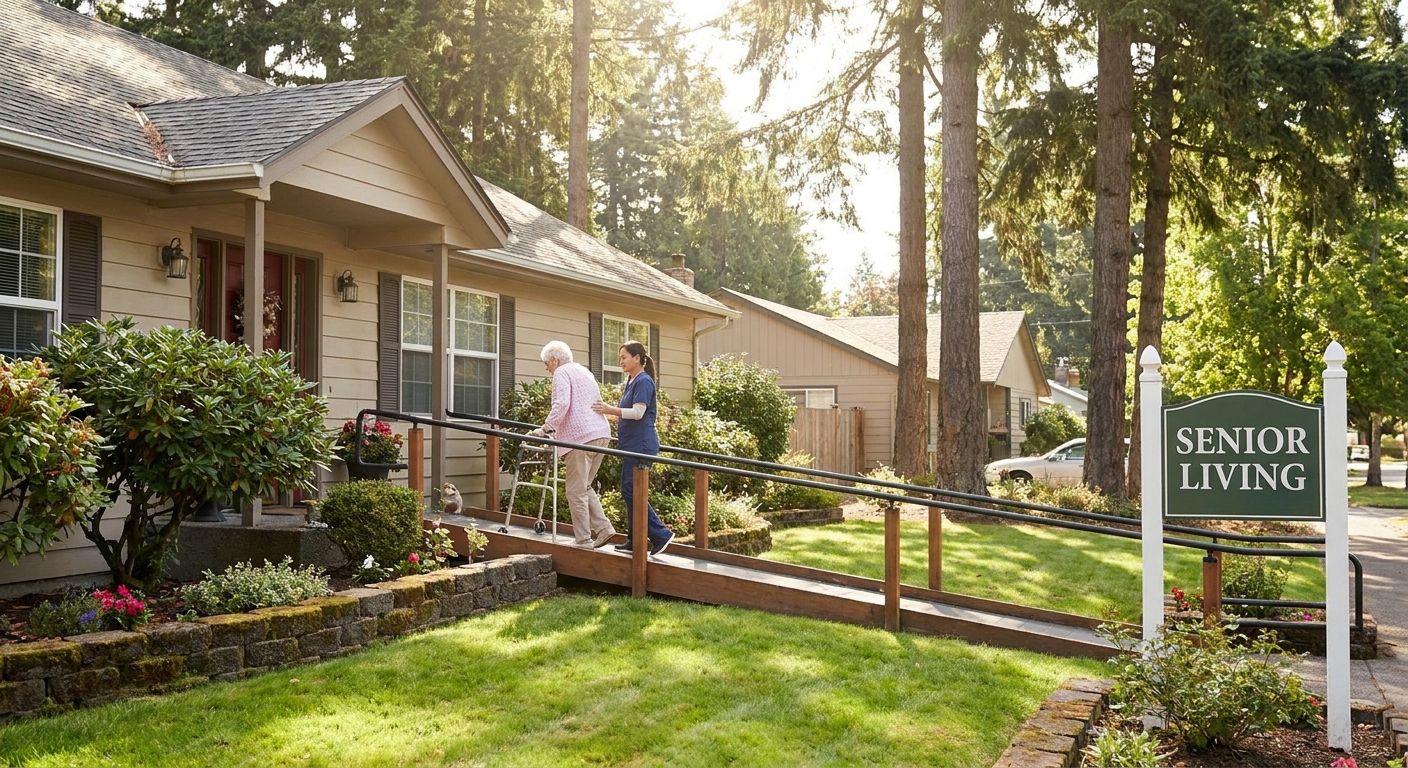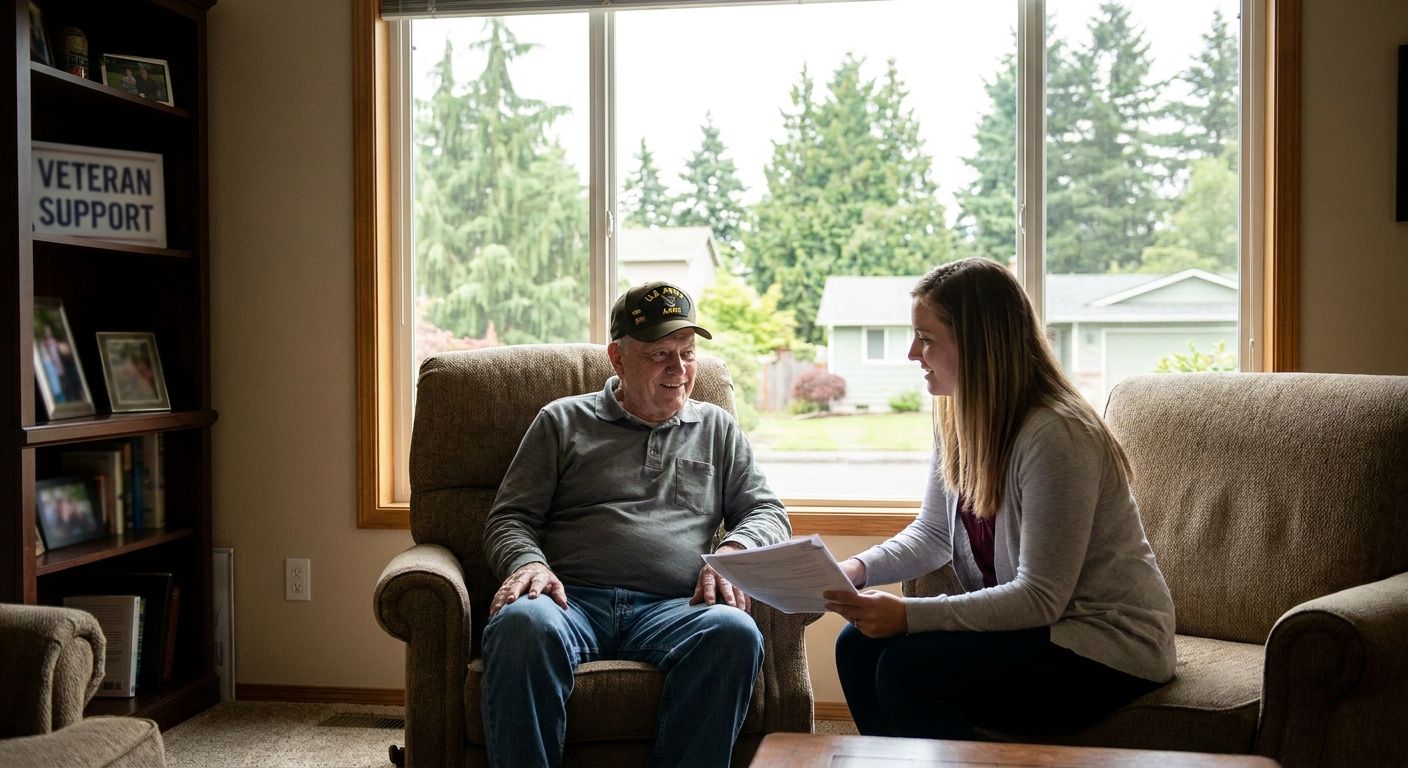
Choosing memory care for early-stage dementia in Vancouver, WA means matching a loved one's independence today with the support they'll need six months or a year from now, without forcing another move every time symptoms shift.
- Essential Living Adult Family Home offers 24-hour residential care and memory support in Salmon Creek/Vancouver, WA — a strong Buy for early-stage dementia needing personalized attention.
- Washington state caps adult family home licenses at 6 residents, which means smaller staff-to-resident ratios than most large memory care wings.
- Skip independent living for an early-stage dementia diagnosis — supervision gaps and missed medication show up faster than families expect.
- Pick a setting your parent can stay in as symptoms progress, not one that forces a second move later.
Why this matters
An early-stage dementia diagnosis doesn't erase independence overnight. Your parent might still cook, drive short distances, or manage their own routine most days — but medication timing slips, appointments get missed, and small confusions start compounding.
Waiting for a crisis before choosing memory care for early-stage dementia in Vancouver, WA usually means picking the first open bed instead of the right fit. Families who look early get to compare settings calmly instead of scrambling after a fall or a wandering incident in 2026.
The setting matters as much as the diagnosis. A person who's still largely themselves does better in a home-like environment than in a locked unit designed for advanced dementia — that's the core tension this guide untangles.
Who this is for
This guide is for adult children in Salmon Creek and Vancouver, WA whose parent was recently diagnosed with early-stage Alzheimer's or another dementia. Your parent is still mobile and mostly independent, but you're the one calling to check if they took their morning pills, and you know a bigger change is coming. You're not looking for a hospital. You're looking for a home that can grow with your parent's needs instead of discharging them somewhere else when things change.
Essential Living Adult Family Home provides 24-hour residential care with memory and dementia support built in from day one, which is exactly the kind of continuity this stage calls for.
What to look for in memory care for early-stage dementia
Staff-to-resident ratio
A smaller resident count means staff notice the small stuff — skipped meals, mood changes, a wandering pattern — before it becomes a safety issue. Adult family homes in Washington are licensed for up to 6 residents, a structural advantage over large memory care wings where one caregiver covers a much bigger group.
Medication management
Early-stage dementia is where medication errors start, not where they end. A home that handles medication management directly — rather than leaving it to a confused resident or a family member juggling a work schedule — closes the single biggest safety gap at this stage.
Structured but flexible daily routines
Routine slows disorientation, but a rigid institutional schedule can feel punitive to someone who's still largely independent. Look for daily structure that flexes around what your parent can still do for themselves in 2026, not a one-size schedule built for advanced-stage residents.
A home environment, not a facility
Small adult family homes look and feel like houses because they are houses — shared kitchen, living room, a handful of housemates. That environment reduces the agitation that comes with long institutional hallways and rotating staff shifts.
Continuity as needs progress
The expensive mistake is picking a place your parent will outgrow in a year. Ask directly whether the home can support increased care needs on-site, or whether progression means another move, another new environment, another adjustment period for someone who struggles with change.
Family involvement and communication
You need a caregiver who calls you before a small issue becomes a big one, not a facility that sends a monthly newsletter. Daily or near-daily communication is standard to expect, not a bonus feature.
Talk through your parent's care needs
Ask about availability and daily routines for early-stage dementia care.
Comparing your care options
Adult family home — the personalized pick. Licensed for a maximum of 6 residents under Washington state rules, an adult family home setting like Essential Living AFH puts far fewer people between your parent and their caregiver than a large facility does. Daily living assistance, medication management, and memory support happen in a home, not a wing of a building. Verdict: Buy for early-stage dementia that still needs supervision without institutional structure.
Dedicated memory care wing at a large assisted living community — the institutional-scale pick. These communities serve many residents across shared common areas, with staff split across a bigger population. That scale can mean more amenities, but it also means less individual attention during the early stage, when personalized routine matters most. Verdict: Consider if your parent needs a large-community setting for other reasons, otherwise weigh the ratio tradeoff carefully.
In-home caregiver — the familiar-setting pick. Keeping your parent in their own house preserves the environment they know, but it puts the full burden of 24-hour coverage on family or rotating hired help. Medication management and safety monitoring get harder to guarantee consistently. Verdict: Consider only if you can staff genuine round-the-clock coverage; Skip if care is currently patchwork.
Independent living community — the too-early pick. These communities are built for residents who don't need supervision, which is exactly the gap that shows up fast with early-stage dementia. Medication reminders and safety checks aren't part of the standard offering. Verdict: Skip once a dementia diagnosis is confirmed.
Adult day program only — the stop-gap pick. Daytime-only programs give a break during work hours but leave evenings and overnight uncovered, which is when confusion and wandering risk tend to spike. Verdict: Consider as a bridge, not a long-term answer.
What to avoid
- Facilities that require a second move as dementia progresses. A place that looks perfect today but discharges residents once needs increase just delays the hard decision — ask directly whether the home supports increased care on-site.
- Locked memory units applied too early. A secured unit designed for advanced-stage wandering can feel confining and demoralizing to someone still capable of most daily tasks — match the security level to the actual stage, not the diagnosis label.
- Generic activity schedules with no personalization. A calendar built for a group, not a person, misses the routines that actually keep early-stage dementia residents engaged and calmer.
Verdict comparison table
| Setting | Staff attention | Home-like environment | Handles progression | Verdict |
|---|---|---|---|---|
| Adult family home (Essential Living AFH) | High — max 6 residents | Yes | Yes, on-site | Buy |
| Large memory care wing | Lower — bigger resident count | No | Sometimes, with unit transfer | Consider |
| In-home caregiver | Depends on staffing | Yes | Only with full-time hire | Consider/Skip |
| Independent living | Low — not built for supervision | Yes | No | Skip |
| Adult day program | High during hours only | No overnight coverage | No | Consider (bridge only) |
FAQ
What is the best memory care option for early-stage dementia in Vancouver, WA?
A small adult family home with 24-hour care and built-in memory support, like Essential Living Adult Family Home in Salmon Creek/Vancouver, WA, generally fits early-stage dementia better than a large facility because ratios are smaller and the environment stays home-like.
Is an adult family home better than assisted living for early-stage dementia?
For early-stage dementia, an adult family home usually offers more individual attention because Washington state caps licenses at 6 residents, versus dozens of residents sharing staff in a larger assisted living community.
How much supervision does someone with early-stage dementia actually need?
Early-stage dementia typically needs medication management and daily check-ins rather than constant hands-on care, which is why a residential setting with 24-hour coverage but a home-like routine fits better than a locked memory unit.
Can my parent move into memory care before symptoms get severe?
Yes, and moving early is usually the better choice — it lets your parent adjust to a new home while still capable of building routines, rather than moving during a crisis later.
Will my parent have to move again as dementia progresses?
Ask any home directly whether they support increased care needs on-site. Homes built around continuity, rather than tiered facility campuses, are designed to avoid a second move.
What's the difference between memory care and regular residential care?
Memory care adds structured routines, medication management, and staff trained specifically in dementia support on top of standard daily living assistance, which matters even at the early stage.
How do I know if it's time for memory care instead of home care?
If medication is being missed, appointments forgotten, or safety incidents are increasing despite home caregiving, it's time to look at a residential setting with 24-hour coverage.
Does Essential Living Adult Family Home serve Vancouver, WA families?
Yes, Essential Living Adult Family Home provides residential care, memory and dementia support, and daily living assistance for seniors and families in the Salmon Creek/Vancouver, WA area.
One last thing
The detail families overlook most: Washington's 6-resident cap on adult family homes isn't a limitation, it's the whole point. Fewer residents means the same caregiver notices when your parent skips lunch or repeats a question three times in an hour — signals that get lost in a facility managing 40 people across a shift. That's the difference between reactive care and care that catches problems in 2026 before they become emergencies.