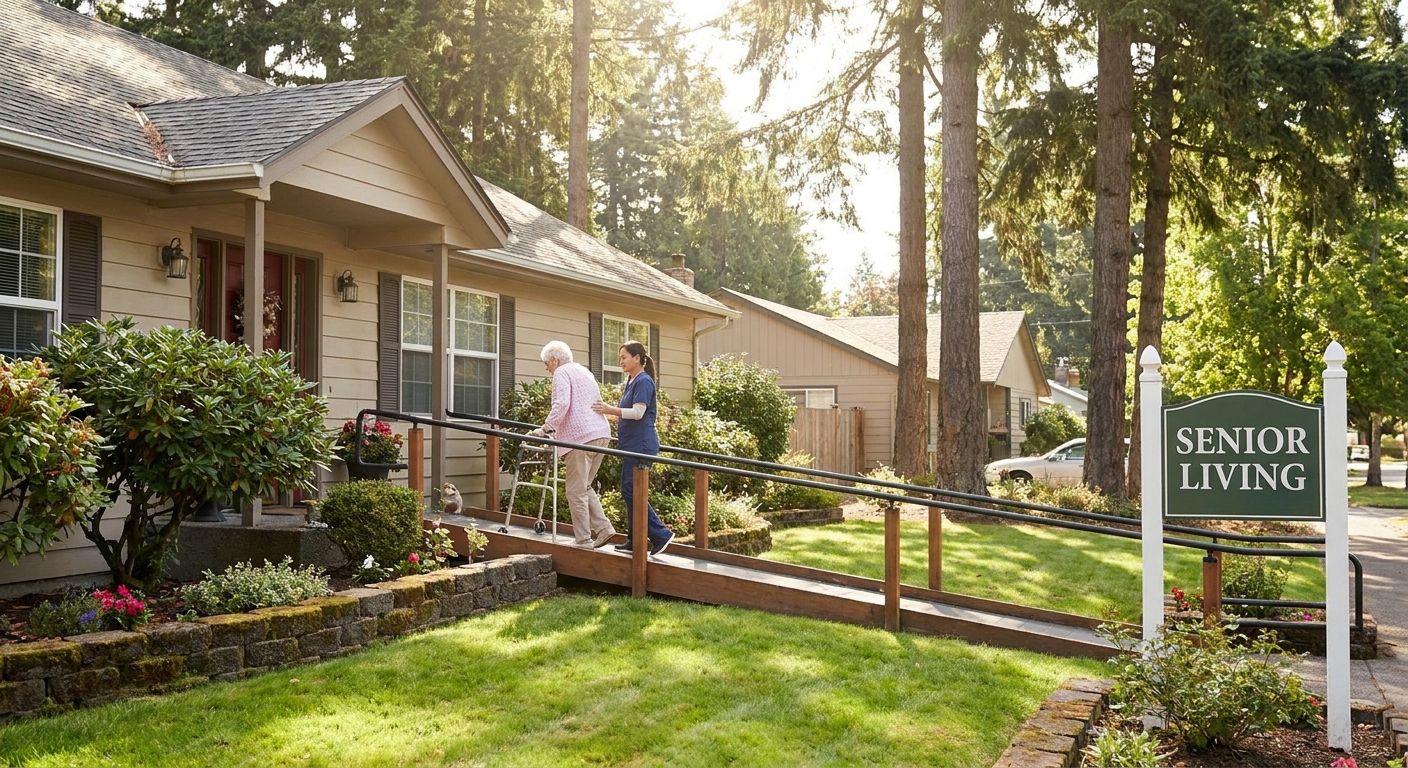
Diabetic seniors need care that keeps insulin timing, meals, and glucose checks on a predictable clock — not every 24-hour care model delivers that, and picking wrong costs families months of trial and error. This guide ranks the five main 24-hour care options for diabetic seniors in 2026 and tells you which one actually fits a private-pay family in Salmon Creek and Vancouver, WA.
- Adult family homes like Essential Living Adult Family Home win for diabetic seniors needing consistent meal and glucose routines — Buy.
- Assisted living communities spread staff across dozens of residents, which strains tight insulin schedules — Hold.
- Skilled nursing facilities suit short Medicare-covered rehab stays, not ongoing diabetic care at home scale — Skip.
- Memory care fits only when dementia and diabetes overlap; otherwise it's the wrong setting — Wait.
Why this matters
Diabetes management isn't a single task, it's a rhythm: meals at consistent times, glucose checks on schedule, medication management for seniors with diabetes that stays coordinated day after day. Break that rhythm and blood sugar swings follow. The setting a family picks in 2026 either protects that rhythm or fights it.
Larger facilities are built around staff efficiency, not individual meal timing. Smaller settings are built around the resident. That difference is the whole story behind this ranking.
How this list is ranked
Each option below is evaluated on three things that matter specifically for diabetic seniors: how consistent the meal and monitoring schedule can realistically be, how many residents share staff attention during a shift, and how well the setting handles the days blood sugar doesn't cooperate. Washington State's own licensing structure shapes several of these differences — a fact any family touring care options in Clark County should know before signing anything in 2026.
This isn't a ranking of specific competing businesses. It's a ranking of care models, because the model determines whether a diabetic senior gets a predictable day or a chaotic one.
The ranked list
1. Adult Family Homes (AFH)
The personalized pick. Washington State licenses adult family homes for up to 6 residents per home, which means one caregiver is watching a handful of people, not a hallway of them. That ratio is what makes consistent glucose checks and on-time insulin realistic rather than aspirational.
Meals in an adult family home are cooked in a home kitchen on a set schedule, which matters more than it sounds — diabetic seniors do better on predictable meal timing than on a cafeteria rotation that shifts by 30 to 45 minutes depending on the day. Staff in this setting also get to know one resident's patterns closely enough to notice when something's off before it becomes a crisis.
Verdict: Buy for private-pay families who want daily monitoring without an institutional feel.
2. Assisted Living Communities
The bigger-footprint pick. Assisted living communities serve far more residents per building than an adult family home, and staff shifts are structured around covering the whole floor, not one person's schedule. For a diabetic senior, that can mean glucose checks and meal timing sliding during the busiest parts of the day.
These communities work well for seniors who are largely independent and just need general oversight. They work less well when diabetes requires someone paying close attention at the same time every day. Families coming out of a hospital stay sometimes look at an alternative to assisted living after a hospital stay for exactly this reason.
Verdict: Hold — fine for lower-acuity needs, riskier for tightly managed diabetes.
3. In-Home Care / Home Health Aides
The familiar-setting pick. Keeping a diabetic senior in their own home with a hired aide sounds ideal, and for some families it is. The catch: true 24-hour coverage requires multiple caregivers rotating shifts, since no single aide can legally or safely work around the clock every day of the week.
Without that rotation built in, families end up with gaps — nights or weekends where no one's watching glucose levels or confirming a meal happened. The cost of stacking enough shifts to close those gaps often surprises families once they price it out.
Verdict: Hold — only works if the rotation is fully staffed, which is harder and pricier than it first appears.
4. Skilled Nursing Facilities
The clinical-intensity pick. Skilled nursing facilities make sense for acute medical instability — recovering from surgery, stabilizing after a diabetic complication, that kind of short window. Medicare covers up to 100 days of skilled nursing per benefit period in 2026, which tells you what these facilities are actually designed for: short-term rehab, not years of daily living.
The environment is clinical by design, which is a strength during recovery and a weakness for someone who needs a long-term home. Families managing a hospital discharge often start here and then look at 24-hour senior care for post-hospital recovery once stabilization is done.
Verdict: Skip for ongoing diabetic care — this is a bridge, not a destination.
5. Memory Care Communities
The dual-need pick. Memory care only belongs on this list when diabetes and dementia overlap. Forgotten meals, skipped insulin, wandering during a low blood sugar episode — these are memory care's core design problems, and a specialized community is built to catch them.
If cognitive decline isn't part of the picture yet, memory care is overkill and often more restrictive than a diabetic senior needs. The setting only earns its place when both conditions are actively in play.
Verdict: Wait — right fit only once dementia symptoms are actually present, not before.
See which setting fits your family
Tour Essential Living Adult Family Home in Salmon Creek and ask about diabetes routines directly.
Comparison table
| Care Option | Staffing Model | Group Size | Meal/Glucose Routine | Verdict |
|---|---|---|---|---|
| Adult Family Home | 1 caregiver per small group | Up to 6 residents | Fixed home-cooked schedule | Buy |
| Assisted Living | Shift-based, floor-wide | Dozens per building | Cafeteria-style, variable timing | Hold |
| In-Home Care | Rotating aides | 1-on-1 (if fully staffed) | Depends entirely on staffing | Hold |
| Skilled Nursing | Clinical shift teams | Facility-wide | Clinical, short-term focus | Skip |
| Memory Care | Specialized dementia staff | Facility-wide | Routine-based, dementia-safe | Wait |
How to evaluate your options
- Verify the state license before touring. Every adult family home in Washington is licensed and inspected — ask to see the license number and confirm the resident cap in person.
- Tour during a meal. Watching how meals and glucose checks actually happen on a random Tuesday tells you more than any brochure.
- Ask what happens on a bad day. A good caregiver can describe, specifically, what changes when blood sugar runs high or low — vague answers are a red flag.
Families wondering how to weigh these factors against everything else — location, staff training, day-to-day feel — can start with how to choose an adult family home in Vancouver, WA before touring anywhere in 2026.
FAQ
What's the best 24-hour senior care for diabetic seniors in 2026?
An adult family home is generally the best fit for diabetic seniors needing 24-hour care in 2026, because Washington's 6-resident license cap keeps meal and glucose routines consistent. Assisted living and in-home care can work too, but only when staffing is dependable enough to hold a fixed schedule.
Is an adult family home better than assisted living for diabetes management?
Yes, for tightly managed diabetes, because adult family homes serve far fewer residents per caregiver than assisted living communities. That smaller ratio makes it easier to hold consistent meal and monitoring times every day.
How much does 24-hour diabetic senior care cost in Vancouver, WA?
Costs vary by care setting and level of need, so ask each provider for current 2026 pricing directly. Adult family homes, assisted living, and in-home care all price differently based on staffing model and services included.
Can an adult family home manage insulin and blood sugar checks?
Yes, medication management is a standard part of daily care in a licensed adult family home. Staff coordinate timing for insulin and other medications as part of the resident's regular routine, not as a separate clinical service.
When is memory care the right choice for a diabetic senior?
Memory care makes sense only when dementia symptoms are already present alongside diabetes, since the setting is built around dementia safety first. Without cognitive decline, memory care is usually more restrictive than a diabetic senior actually needs.
How many residents live in a typical adult family home?
Washington State licenses adult family homes for up to 6 residents per home. That cap is what keeps staff-to-resident attention high compared to larger care settings.
Is in-home care enough for a diabetic senior living alone?
It can work, but only with a fully staffed rotation of caregivers covering nights and weekends without gaps. A single aide cannot provide true round-the-clock coverage on their own.
What should families ask when touring care options for a diabetic parent?
Ask to see the meal schedule, watch a glucose check happen in person, and ask staff to describe what changes on a day blood sugar runs high or low. Specific, confident answers separate dependable care from a rehearsed sales pitch.
One last thing
The detail families miss most often: it's not the glucose meter or the meal plan that predicts whether diabetic care goes well in 2026, it's the resident-to-caregiver ratio at 3 a.m. Washington's 6-resident cap on adult family homes exists precisely because smaller groups mean someone's actually paying attention when it counts.