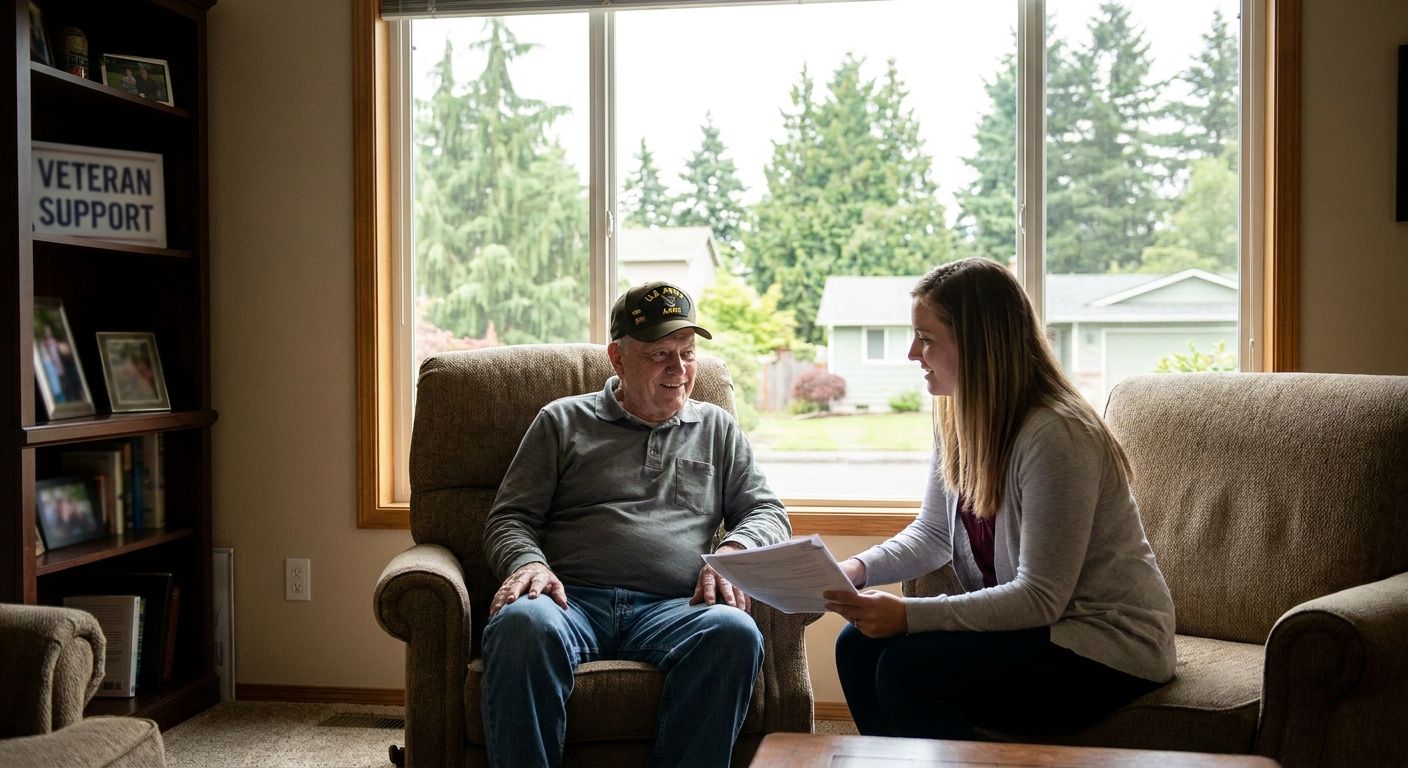
A senior leaving the hospital often needs more supervision than a spouse or adult child can safely provide at home, but a large assisted living building isn't always the right next step either. This guide walks through what to look for in an assisted living alternative for seniors leaving the hospital, and which care setups actually fit that transition.
- Essential Living Adult Family Home is a solid assisted living alternative for seniors leaving the hospital in Salmon Creek/Vancouver, WA — Consider.
- Small six-resident homes give closer supervision than big facilities during the critical first 30 days after discharge.
- Skip any placement that can't accommodate a wheelchair or walker on day one.
- Memory care and steady medication routines matter most when a hospital stay uncovers new health needs.
Why This Matters
A hospital discharge planner hands a family a folder and a deadline, not a long-term care plan. The senior may be steadier than they were on admission, but still weaker than they were before the fall, the surgery, or the illness that put them there in the first place.
Big assisted living communities can take weeks to process an intake. Essential Living Adult Family Home works at a smaller scale — a licensed adult family home in Salmon Creek/Vancouver, WA, built around the kind of close, personal supervision a family needs right after a hospital stay, not months later. In 2026, more families are looking at this smaller-home model specifically because it moves faster than a traditional facility and doesn't ask a recovering senior to adjust to a building with dozens of residents.
Who This Is For
This guide is for the adult child or spouse standing in a hospital hallway, being told discharge is tomorrow, and realizing home alone isn't safe anymore. It's for families whose loved one needs 24-hour oversight, help with mobility or medication routines, or memory support that surfaced during the hospital stay — and who are paying privately for care rather than waiting on a program to approve a placement. If that's your situation heading into 2026, the criteria below apply directly to you.
What to Look for in an Assisted Living Alternative for Seniors Leaving the Hospital
24-Hour Supervision, Not Scheduled Check-Ins
A senior fresh out of the hospital needs someone present around the clock, not a caregiver who visits twice a day. Ask directly how staffing works overnight — this is where families get surprised after move-in, not before.
A Small Resident Count
Washington State licenses adult family homes for two to six residents, a fraction of the population in a typical assisted living building. Fewer residents per caregiver means faster response time when someone needs help getting up, getting to the bathroom, or managing pain.
Mobility and Fall-Prevention Readiness
Fall risk climbs after any hospital stay, especially in the first few weeks home, when strength and balance haven't fully returned. The right setting should already be equipped for walkers, wheelchairs, and grab-bar-level supervision — not scrambling to retrofit after move-in.
Steady Medication Routines
A hospital discharge usually comes with a new or adjusted medication list. Look for a home that builds a dependable daily routine around that list and coordinates with the prescribing physician, so the family isn't tracking pills on top of everything else.
Ability to Handle Changing Needs
Some seniors leave the hospital with a diagnosis that wasn't there before — early dementia, a mobility limitation that's now permanent, or a condition that will need more support in six months than it does today. A home that can flex with those changes saves a second, harder move later.
Family Communication
Ask how often the home updates family on day-to-day status, not just in a crisis. Families making a private-pay decision want a direct line to staff, not a call center.
Care Options to Consider After a Hospital Stay
The recovery-focused pick. 24-hour senior care for post-hospital recovery is built specifically for the window right after discharge, when supervision needs are highest and routines haven't stabilized yet. The spec that matters: staff presence around the clock, not shift gaps overnight. Verdict: Consider if your loved one was hospitalized in the past few weeks and can't safely be left alone at any hour.
The mobility-safe pick. Adult family home for seniors with mobility limitations fits when a hospital stay leaves someone with a walker, a wheelchair, or a permanent balance issue that wasn't there before admission. The number that matters here is the resident count — a two-to-six-resident home means staff notice a mobility struggle immediately, instead of after a fall. Verdict: Consider if physical therapy discharge notes mention a new mobility aid.
The memory-aware pick. Memory care for early-stage dementia in Vancouver, WA matters when a hospital stay is what first surfaces confusion, disorientation, or memory changes a family hadn't noticed at home. Hospitalization itself can temporarily worsen confusion in older adults, which is why some families discover a cognitive issue only after a stay. Verdict: Consider if discharge paperwork mentions confusion, delirium, or a cognitive screening result.
The short-term bridge pick. Respite care for family caregivers in Vancouver, WA works when the family isn't ready to commit to a permanent move but needs somewhere safe for the first stretch home. It buys time to evaluate a longer-term option without rushing a decision in a hospital hallway. Verdict: Consider if you need weeks, not a lifetime commitment, to make the next call.
Talk through your discharge timeline
Ask about availability before the hospital sets a discharge date.
What to Avoid
- A facility that can't take someone the week they're discharged. Some assisted living buildings have waitlists measured in months — not useful when a hospital is discharging tomorrow.
- A placement that treats mobility equipment as an afterthought. If staff seem unsure how they'll handle a wheelchair or a hospital bed, that's a sign to keep looking.
- A home with no plan for changing needs. If the answer to "what happens if memory issues develop later" is a shrug, that's a second move waiting to happen.
Comparison at a Glance
| Option | Best For | Supervision Level | Resident Count |
|---|---|---|---|
| 24-hour post-hospital recovery care | Immediate discharge needs | Around the clock | 2-6 |
| Mobility-limitation support | New walker/wheelchair use | Around the clock | 2-6 |
| Early-stage dementia memory care | Cognitive changes post-hospital | Around the clock | 2-6 |
| Respite care | Undecided, short-term need | Around the clock | 2-6 |
FAQ
What's the best assisted living alternative for seniors leaving the hospital?
A small adult family home with 24-hour supervision is a strong alternative for seniors leaving the hospital, since it handles the highest-risk recovery window without the wait times of a large facility. Washington State licenses these homes for two to six residents, which allows closer daily oversight than most assisted living buildings.
Is an adult family home better than a large assisted living facility for post-hospital recovery?
For the weeks right after discharge, a smaller home often works better because staff can respond faster and monitor changes more closely. A large facility may still make sense later, once the senior's needs have stabilized.
How much supervision does a senior need right after hospital discharge?
Most seniors need someone present around the clock for at least the first few weeks after discharge, since fall risk and confusion are both higher during this period. That need typically decreases as strength and routine return.
Can an adult family home handle mobility equipment like walkers and wheelchairs?
Yes, homes built for seniors with mobility limitations plan around walkers and wheelchairs from day one rather than adjusting after move-in. Ask specifically how the home accommodates equipment before committing.
Is memory care available if a hospital stay reveals early dementia?
Yes, memory care for early-stage dementia is available and appropriate when confusion or memory changes surface during or after a hospital stay. Early intervention with a consistent routine tends to help more than waiting.
How is medication managed in an adult family home?
Staff build a daily routine around the medication list a hospital sends home with the family and coordinate with the prescribing physician. The goal is consistency the family can count on, not a rotating schedule.
Is respite care an option instead of long-term placement?
Yes, respite care lets a family place a loved one somewhere safe for a short period while deciding on a longer-term plan. It's a common bridge option right after a hospital discharge.
Do adult family homes accept veterans in Clark County?
Yes, adult family homes in Clark County serve veterans, and some homes structure care specifically around veterans' needs. Ask directly about veteran-specific accommodations when comparing options.
One Last Thing
The detail families overlook most in 2026: a hospital discharge date is a deadline set by the hospital's schedule, not by how ready your loved one actually is to go home alone. Lining up an adult family home before that date — rather than after a fall sends them right back to the ER — is the single move that saves the most stress.