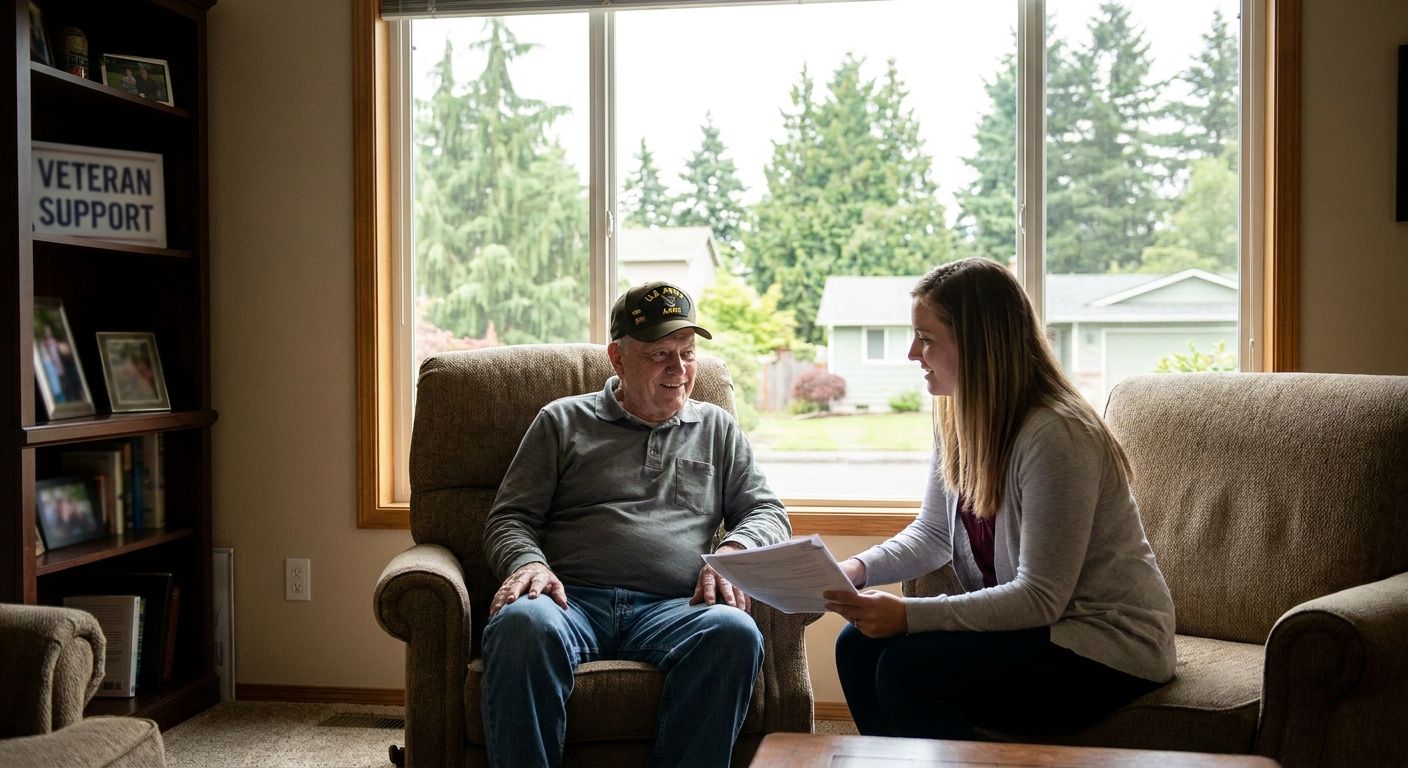
Finding the right medication management for seniors with high blood pressure means finding a home where a dependable daily routine, not a pillbox on the kitchen counter, keeps blood pressure numbers steady and families reassured.
- Essential Living Adult Family Home builds medication management for seniors with high blood pressure into a consistent daily routine — Buy.
- Washington adult family homes are licensed for up to six residents, which keeps staff-to-resident ratios tight for daily monitoring.
- Large facilities with rotating staff make continuity of blood pressure care harder to track — Skip if staff turnover is high.
- Homes that coordinate directly with a resident's physician close the loop families worry about most in 2026.
Why this matters
High blood pressure rarely announces itself. It sits quietly in the background until a missed routine, a skipped low-sodium meal, or an inconsistent medication schedule lets it creep upward.
For families in Salmon Creek and Vancouver, WA, the question isn't whether a parent needs help — it's whether the home they choose treats medication management for seniors with high blood pressure as a structured daily habit or an afterthought squeezed between other tasks. That difference shows up in blood pressure readings, in hospital readmission rates, and in how confident a family feels walking out the door after a visit.
Who this is for
This guide is for adult children and spouses evaluating residential care for a senior managing hypertension, especially families who are private-pay and want a smaller, more personal setting than a large assisted living campus. If your loved one takes blood pressure medication on a strict schedule, needs their sodium intake watched, or has had a cardiac event and needs steady oversight after discharge, the criteria below apply directly to your search.
What to look for in medication management for seniors with high blood pressure
A documented, consistent daily schedule
Blood pressure medications work best when taken at the same time every day — a routine, not a guess. Ask any home how they document administration times and what happens if a resident is asleep or off-site during a scheduled dose window.
Blood pressure monitoring as a built-in habit
The American Heart Association defines high blood pressure as a reading of 130/80 mmHg or higher, and tracking trends over weeks matters more than any single reading. A quality home checks blood pressure on a set schedule and keeps a running log a family can review, not just a number jotted down once a week.
Coordination with the resident's physician
Dosage changes, refill timing, and new prescriptions after a doctor visit need to move from the clinic to the caregiving staff without a gap. Homes that call the physician's office directly, rather than relying on the family to relay instructions, close that gap.
Diet and lifestyle support that matches the medication plan
Sodium intake, hydration, and activity level all affect blood pressure alongside medication. A home that plans low-sodium meals and encourages daily movement supports the medication instead of working against it.
Staff who know the resident, not just the chart
Continuity matters. A caregiver who sees the same resident daily notices subtle changes — swelling, fatigue, confusion — that can signal a blood pressure problem long before a scheduled check catches it.
Clear, regular communication with family
Families want to know how a parent is doing without having to call and ask. Homes that proactively update families on medication routines and health trends reduce the anxiety that comes with placing a loved one in someone else's care.
What quality medication management looks like
The daily routine essentials — the non-negotiable
Medication given at the same two or three times each day, logged consistently, with no gaps on weekends or holidays. This is the baseline every home should meet without exception. Buy — insist on this before anything else.
Blood pressure monitoring as routine, not reaction — the quiet safeguard
Regular checks against the 130/80 mmHg benchmark, tracked over time and shared with families. A home that only checks blood pressure when something seems wrong is already behind. Buy — this should be standard, not an add-on.
Coordination with the resident's physician — the connector
A home that calls the doctor's office directly after a checkup, rather than waiting for the family to pass along instructions, prevents the lag that causes missed dosage changes. Buy — ask how this handoff actually works before you sign anything.
One home, multiple chronic conditions — the reality check
Many seniors managing high blood pressure are also managing diabetes or taking blood thinners, and the routines for each need to run in sync rather than in isolation. Essential Living Adult Family Home structures medication management for seniors with diabetes and medication management for seniors on blood thinners alongside blood pressure routines rather than as separate systems. Consider — confirm any home you're evaluating can actually manage overlapping conditions, not just one at a time.
Post-hospital stabilization support — for after a cardiac event
Seniors discharged after a stroke, heart attack, or hypertensive crisis need tighter monitoring in the first weeks home. 24-hour senior care for post-hospital recovery is where this kind of stabilization happens. Consider — this matters most in the 30 to 60 days right after discharge.
“If a home can't tell you how a medication change gets from the doctor's office to the caregiver's hands, that's the gap that leads to trouble.”
What to avoid
- Large facilities with high staff turnover. Rotating caregivers mean nobody notices the small changes — a swollen ankle, a change in mood — that often precede a blood pressure spike.
- Homes that treat medication management as a checkbox. A pillbox filled once a week without daily verification isn't management, it's hope.
- Any home vague about physician coordination. If nobody can explain how a dosage change reaches the caregiving staff, assume it won't happen reliably.
See how daily routines are structured
Talk with Essential Living Adult Family Home about care for high blood pressure.
Verdict comparison table
| Criteria | What good care looks like | Red flag |
|---|---|---|
| Medication schedule | Same times daily, logged and reviewable | Given "when convenient" for staff |
| Blood pressure monitoring | Regular checks against 130/80 mmHg, trended over time | Only checked when something seems off |
| Physician coordination | Direct calls after appointments | Family expected to relay every change |
| Diet support | Low-sodium meals planned around the medication plan | No connection between meals and medication |
| Staff continuity | Same caregivers see the resident daily | Frequent staff rotation |
| Family communication | Proactive updates on routines and trends | Updates only when families ask |
Essential Living Adult Family Home operates as a residential care setting in Salmon Creek and Vancouver, WA, and Washington adult family homes overall are licensed for up to six residents — a structure that keeps daily oversight tighter than a large facility managing dozens of residents at once. That's the scale families should be comparing against when evaluating medication management for seniors with high blood pressure in 2026.
FAQ
What is medication management for seniors with high blood pressure?
It's a structured daily routine for giving blood pressure medication at consistent times, monitoring readings, and coordinating any changes with the resident's physician. Done well, it turns a complicated prescription schedule into a dependable habit families don't have to worry about.
How does an adult family home handle blood pressure medication?
Caregiving staff administer medication on a set daily schedule and log each dose, then track blood pressure readings over time rather than reacting to a single number. Any dosage change from the physician gets communicated directly to staff rather than passed through the family.
Is medication management included in adult family home care in Vancouver, WA?
Medication management is a core part of residential care at homes like Essential Living Adult Family Home in Salmon Creek and Vancouver, WA. Ask any home directly what's included in their 2026 care plans before comparing pricing.
How often is blood pressure checked in residential care?
Most quality homes check blood pressure on a regular schedule, not just when a resident reports symptoms. Consistent tracking over weeks matters more than any single reading, since trends reveal problems earlier than isolated checks.
Can a senior with high blood pressure and diabetes live in the same care home?
Yes, and it's common — many seniors manage both conditions at once, which is why homes need routines that run in sync rather than as separate systems. Ask specifically how a home coordinates medication timing when a resident has more than one chronic condition.
What's the difference between assisted living and an adult family home for medication management?
Adult family homes in Washington are licensed for up to six residents, which generally means more consistent staff-to-resident attention than larger assisted living communities. That smaller scale tends to make daily medication routines easier to track closely.
How much does medication management cost as part of senior care?
Costs vary by home and level of care needed, so ask for current 2026 rates directly. Private-pay families in Salmon Creek and Vancouver, WA should request a full breakdown of what's included in daily care before comparing options.
Is private-pay senior care available in Salmon Creek and Vancouver, WA?
Yes, private-pay residential care is available in the Salmon Creek and Vancouver, WA area, including homes that specialize in medication management for chronic conditions like high blood pressure. Essential Living Adult Family Home serves private-pay families directly in this area.
One last thing
The detail families overlook most often isn't the medication schedule — it's whether a home's daily routine includes movement and low-sodium meals as a matched pair with the medication plan, since blood pressure control in 2026 still depends on all three working together, not medication alone.